

In new energy vehicles, high-voltage (800V) controllers are one of the essential technologies required for the input of energy . Because, as the industry has evolved, the need for faster charging, improved thermal stability, and better efficiency in NEVs has also arisen.
However, due to this change, the stress on power electronics to manage heat has also increased. To manage this heat effectively, thermal interface materials (TIMs) now play a crucial role. They act as a medium between heat-generating devices and their cooling surfaces, helping transfer heat more efficiently.
That’s why today’s high-voltage controllers are doing more than you can imagine. They work better with battery voltage systems. In fact, they also support fast-charging features along with efficient protection mechanisms. With better materials, smarter integration – a new generation of HVCs is evolving quickly.
In this guide, we’ll specifically explore and go over the major trends of high-voltage controllers in shaping this evolution in the world of NEVs . We’ll also discuss how new trends are contributing to the next wave of NEV power-electronics innovation.
The Centrality of High-Voltage Controllers in NEV Performance
In NEVs, HVC is the main power electronic unit. Basically, it manages and controls all high-voltage systems (motors, traction inverters, OBC, compressors) in the vehicle. From controlling how the motor accelerates to how efficiently the vehicle uses energy, HVCs control several operations.
As the industry moves toward 400V to 800V platforms, at the same time, the controller’s responsibilities have grown even more. NEVs now demand faster switching, smarter thermal control, stronger protection features, and precise monitoring. And here, the high-voltage controller ensures smooth driving, reduced battery voltage drops, shorter charging times, and an extended battery pack. That too at a low cost.
Defining the High-Voltage Controller (HVC): From Inverter to System Management

Earlier high-voltage controllers served only one main function. Their job was just to convert DC power from the battery into AC power for the motor so the vehicle could run. However, as the HVCs have evolved to meet advanced energy vehicle features, their functioning has also evolved. HVCs now handle multiple tasks simultaneously. They manage:
- Motor control and torque regulation.
- Power distribution across the vehicle.
- Communication between major systems. Mainly between the BMS, OBC, and DCDC converter.
- Real-time monitoring of current, voltage, and temperature.
- Components against short circuits, overheating, and overload.
This shift clearly shows why high-voltage controllers have become the central and core components in NEVs.
The Growing Market Demand for Higher Efficiency and Faster Charging

According to the TrendForce report, NEV sales reached 4.02 million with a 39% year-on-year increase in Q1 2025. With the increase in electric-vehicle adoption over the years, users’ expectations have also increased.
In upcoming years, NEV drivers are expecting a system to charge their vehicles in minutes, not hours. Fleet users want lower energy and suitable or lower maintenance costs. Regulators are also demanding higher efficiency and reliability to meet sustainability goals.
At the same time, customers are also expecting an increase in fast-charging station infrastructure. As per the IEA EV charging report, public charging points added in 2024 alone were more than the total number available in 2020.
To meet all such demands in next-generation models, NEV manufacturers must build highly capable and efficient NEV models. Protection systems that are thermally stable, supply faster DC charging, and have advanced high-voltage controllers, SiC-based inverters, and improved thermal interface materials (TIMs).
Major Trends of High-Voltage Controllers for New Energy Vehicles (NEV)
Let’s now discuss four major trends of HVCs that are shaping next-generation EVs.
Trend 1: The Evolutionary Upgrade to 800V/1000V Architecture

The Benefits of 800V: Boosting Charging Speed and System Efficiency
Earlier, NEVs used to operate a 400V system. However, with time, as EVs have evolved, customers’ demands for fast charging have also increased. To meet advanced demands, NEVs are now widely switching to 800V/1000V architectures.
Mainly, there are two reasons behind this shift. One big advantage is certainly to reduce charging time (from hours to minutes). Second is to improve the energy transfer speed.
Design Challenges: Insulation, Component Stress, and Thermal Management
Where an 800V shift has its advantages, it also brings engineering challenges. One big challenge is to find compatible components that must withstand higher insulation. In fact, switching frequencies may increase heat generation. So thermal management may also be required.
The Impact on Battery Management Systems (BMS) and Auxiliary Loads
Apart from that, higher voltage also impacts the BMS and auxiliary systems. The BMS must support a more precise voltage at high loads. That is why, to maintain reliability, the entire NEV architecture and production must evolve along with the HVC.
Trend 2: The Technological Leap with SiC and GaN in Main Inverters
The SiC Dominance: Reduced Switching Losses and Higher Operating Temperatures
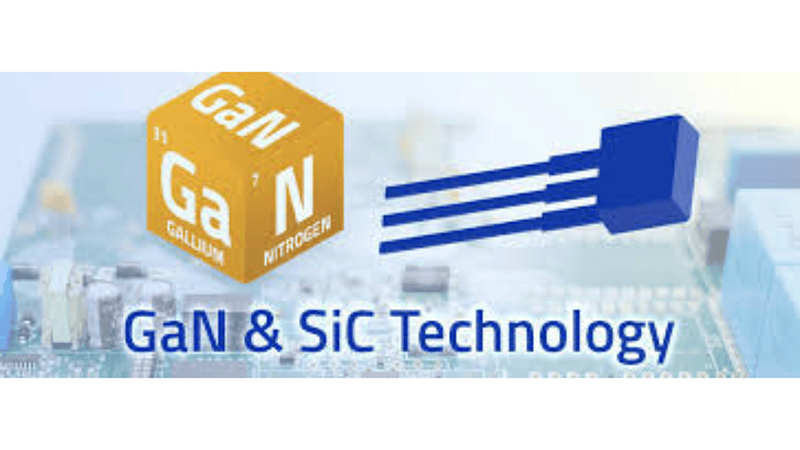
Nowadays, in HVCs, silicon Carbide (SiC) is a widely used semiconductor material. Unlike silicon, SiC switches electricity much faster that too with high efficiency. And by reducing switching losses, it basically helps extend the NEV range.
Pushing Power Density: Increased Switching Frequencies and Miniaturization
With SiC, engineers can also reduce higher frequencies. Doing so may eventually reduce the size of inductors, capacitors, and other passive components. As a result, consumers get a smaller and lighter setup. Also, next-generation HVCs become a more power-dense setup.
Application of Gallium Nitride (GaN) in Low-Power Auxiliary Controllers
Apart from SiC, Gallium Nitride (GaN) is also gaining equal importance. They work best in low-power auxiliary controllers and help stabilize output voltages.
Trend 3: Extreme Integration for Optimized Power Density and Cost
The Rise of the “x-in-1” System: Integrating DCDC, OBC, and VCU into the HVC
To reduce system complexity and cost, manufacturers are now integrating multiple power electronics in one build (as x-in-1 solutions). Like integrating the traction inverter, DC/DC converter, and onboard charger (OBC). This integration aims to improve efficiency, reduce wiring, module size, and, mainly, reduce resource costs.
The Critical Role of High-Integrated Isolation Solutions for Safety and Communication
For HVCs as x-in-1 solutions, isolation of each panel becomes essential. To address this configuration, highly integrated isolation solutions play a key role. They ensure safe communication between each panel (like battery system, motor control, and auxiliary circuits) separately, maintaining stable output voltages.
Advancements in Cooling Systems (Liquid Cooling) for Integrated Modules
When components are together in one unit, they generate more heat. That is why heat management is also very crucial. Here, advanced cooling solutions like thermal interface materials play a powerful and easy role. These solutions help keep power electronics running at safe operating temperatures even under peak load.
Trend 4: Enhanced Functional Safety and Reliability Standards (ISO 26262)
Meeting ASIL-D Requirements: Hardware and Software Redundancy
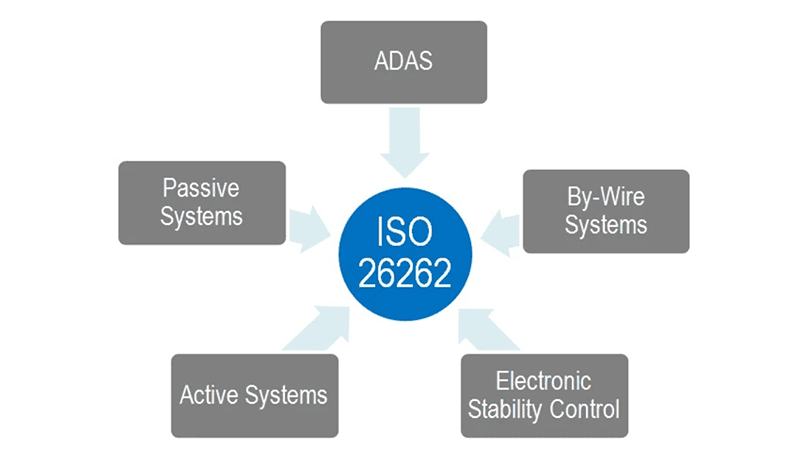
With the evolution of NEVs, functional safety becomes a core requirement. While not every module must meet ASIL-D, HVCs are generally expected to comply with ISO 26262 and also meet ASIL-D standards.
Advanced Diagnostics Solutions for Predictive Maintenance
Including diagnostic features in HVCs is also required. They do real-time monitoring of temperature, output voltages, current, insulation resistance, and switching behavior. Even such features help find failures early and support predictive maintenance strategies.
The Importance of Component Sourcing and Supply Chain Resilience
For NEV manufacturers, consistent component sourcing is also extremely important based on production categories. Having all resources in place helps avoid production delays and build high-voltage systems.
Conclusion: JIUJU’s Commitment to Next-Gen High-Voltage Controller Solutions
With the constant evolution in high-voltage controllers, thermal management in NEVs is a non-negotiable factor in terms of customer safety and vehicle performance. Because proper heat dissipation is crucial to keep battery, inverter, and controller components running at their optimal temperature.
Recognizing this, JIUJU focuses on manufacturing advanced thermal management components. JIUJU is a Chinese thermal materials manufacturer and wholesaler. We produce high-performance thermal management solutions. Like car radiators, heat sinks, thermal pads, thermal grease, and thermal gel. Not just our products provide efficient cooling needs. They are also compatible with 800 V platforms.
Moreover, our professional team can also manufacture a tailored thermal solution for your cooling requirements in vehicles. In case you are looking for a reliable business partner, JIUJU is the right choice. Contact our customer team today to get an instant inquiry.
FAQs About High-Voltage Controllers
1. What is a High-Voltage Controller (HVC) in an NEV?
A HVC is basically the central unit that manages the power flow between the battery, inverter, DC systems, motor, and auxiliary loads. It also manages when the driver must turn throttle, manages DC conversion, and ensures safe distribution of power across all vehicle systems.
2. What is the role of HVC in maintaining battery voltage drops?
Basically, battery voltage drops happen when the motor demands high current or when multiple DC loads are active at once. When this series happens, HVC monitors real-time voltage and adjusts energy distribution immediately. As a result, it balances load, protects components, and ensures users do not feel performance loss when using the throttle.
3. What are the typical applications of an HVC in electric vehicles?
HVCs are widely used in several major EV applications worth reading about . Its common applications include motor control, DC/DC conversion, onboard charging, regenerative braking, thermal management, and system protection.
4. Are JIUJU thermal products compatible with all NEVs?
Absolutely. JIUJU produces advanced thermal solution products that support modern HVC applications, catering to all heat problems. We also manufacture customized cooling solutions to customer requirements.