Polyimide has taken the aerospace, automotive, and electronics industries by storm. This is just because of the unmatched heat resistance and chemical stability that the material offers. Moreover, it possesses exceptional durability, and with such characteristics, it is easy to say that polyimide is promising to be a game changer.
Are you interested in learning how this material defies the future? Well! Keep on reading, as we will help you know how polyimide is the secret ingredient for cutting-edge technology!

1) Introduction to Polyimide
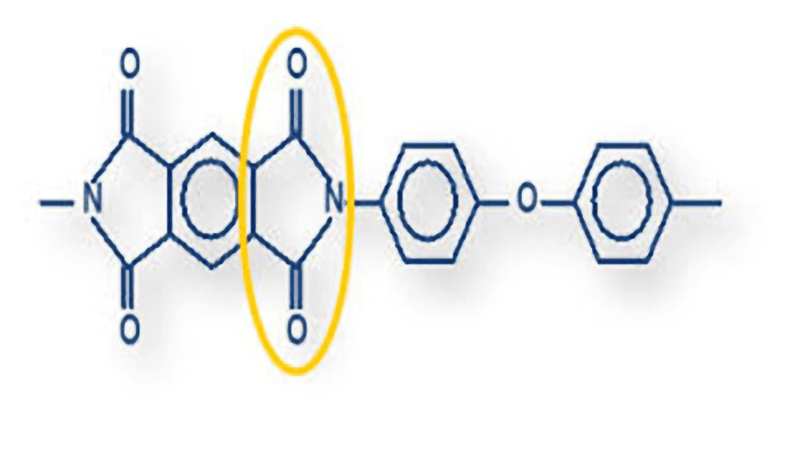
Polyimide is a complex polymer compound characterized by the imide ring in its molecular structure. It finds a broad application in areas where long-lasting organic materials are required such as up to 400°C high-temperature fuel cells, flexible displays and military components which are built to endure severe conditions.
Turning heads in the realm of electronics and aerospace mechanical engineering, polyimide serves as a film substrate as well as a coating material because of its precision as well as reliability.
This coupled with the fact that Thermoplastic polyimides, which are usually required to be heated to a working temperature ranging from 300°C to 400°C, have the potential to be molded into intricate outlines. Thus, it opens the doors to several industrial applications.
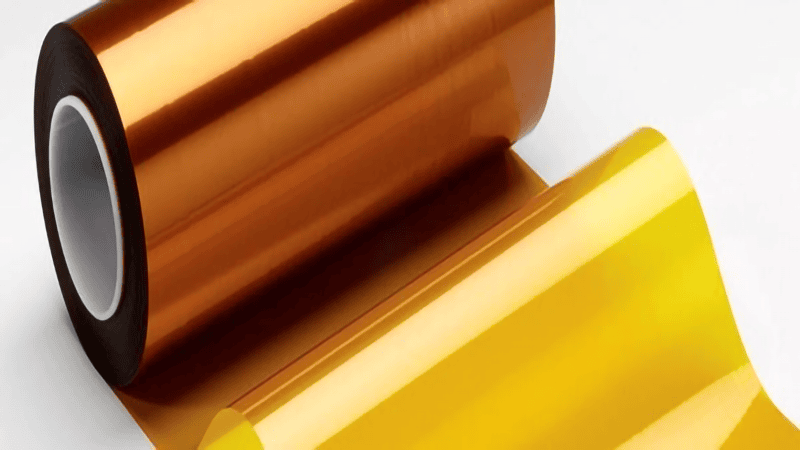
The global polyimide market is expected to witness an impressive CAGR of 5.8%, indicating the escalating requirement in future applications.
2) Properties of Polyimide
Polyimide possesses a distinctive set of characteristics that are ideal for a variety of complex tasks. Some of them are as follows:
- Strong and Durable: Polymer possesses strength of more than 100 MPa which leads to very low creep. Hence, it promises reliable performance over long periods, making them ideal for applications such as flexible printed circuits and structural components.”
- High-Temperature Resistance: These resins can endure extremely high temperatures up to around 400°C, without compromising on the structure or design.

- Heat-resistance: These polymers don’t hold heat and have an innate resistance to ignition, meaning less need for flame retardants which ensures additional protection in sensitive areas.
- Solvent resistant: These polymers resist solvents, oils and corrosive chemicals which are a common sight in an industrial environment.
- Thermal Stability: Polyimide is able to sustain its essential reliability even when under prolonged exposure to heat.
- Good Electric Insulation: Due to its high dielectric strength, it is safe to say that such polymers can be used in devices, to stop electricity from flowing through.
3) Synthesis and Analysis of Polyimide
Polyimides can be prepared in several ways and the most widely used is a two-step method.
Step#1) First, a dianhydride and a diamine monomers serve as precursors. These two monomers react to yield an intermediate form, which is known as polyamic acid.
Step#2) Kindly note that in the case of polyamic acid, heating 300°C causes a chemical change to take place which is referred to as imidization. This step makes it the final polyimide. This can be done in a solvent to create a more convenient process or done directly on the surfaces in order to form coatings or films.

How to check the reaction progress?
- In order to perform a thorough analysis of the chemical reaction and ascertain that the achieved results coincide with the desired ones, IR spectroscopy can be employed. This process enables you to classify the bonds involved in the imidization reaction, thus aiding you in knowing polymerization was done properly.
4) Applications of Polyimide
Given its remarkable thermal stability and flexibility, polyimide is utilized in various industries. Among its various applications, the following are worth highlighting:
i) Polyimides in Electronics:
Polyimide has applications in electronics such as in flexible printed circuits (FPCs), motor coils, wire insulations, and dielectric films in semiconductor devices. In addition, it is used in displays where LCDs are concerned such as for the orientation and separating films of pixels in organic EL displays. The material can last in 400 degrees Celsius heat.
ii) Polyimides in Flexible Circuits:
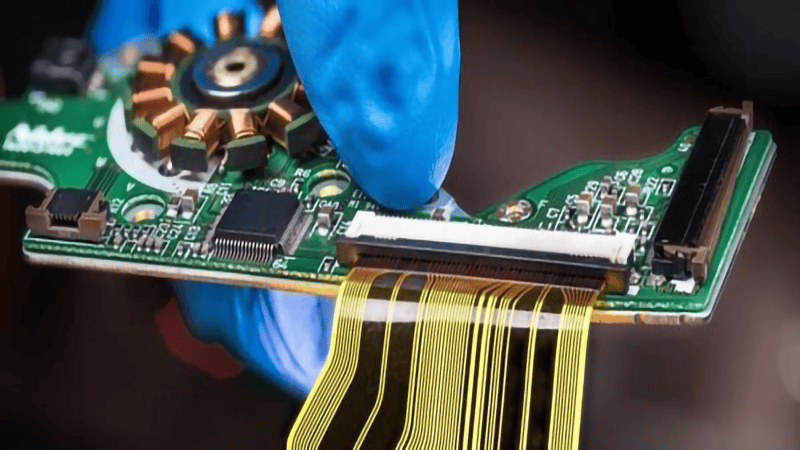
Polyimide serves as a necessary substance in the production of flexible circuit boards and flat flex cables. These boards have a small thickness as low as 25 microns and can resize their shape to fit irregularly sized electronics, and usually range from 25 to 50 microns.
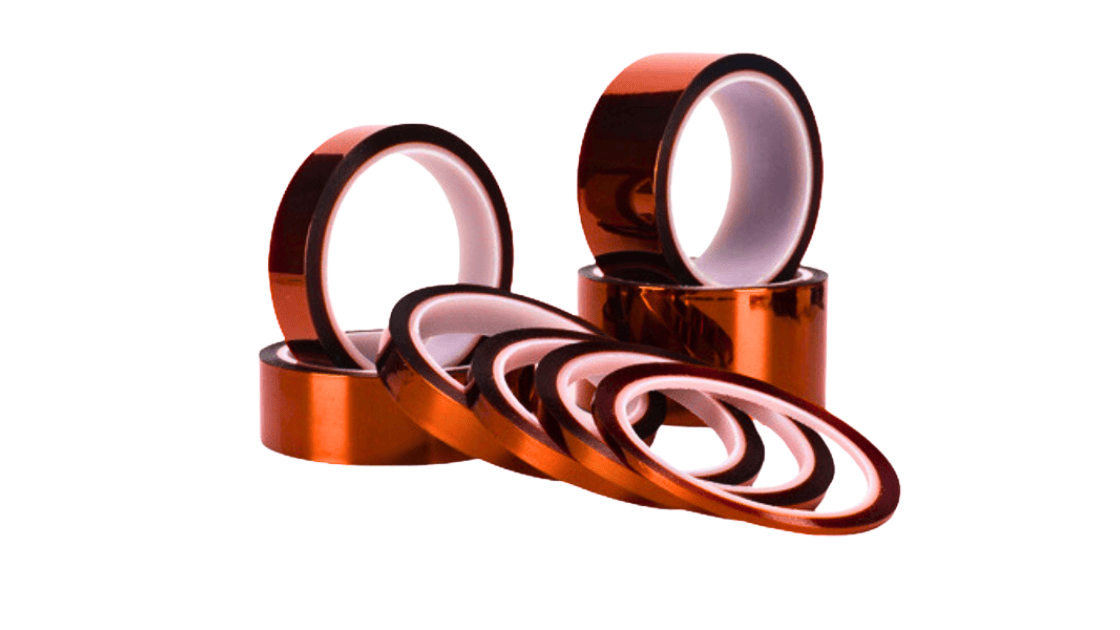
It is also used to insulate magnet wire. Many of polyimide films including Kapton and UPILEX are in use.
iii) Polyimides in Automotive Industry:
The automotive industry holds Polyimide in high regard because it can endure extremely high temperatures and severe environments. It is commonly used in heating-related components: wiring, cables, and parts within engines.
Polyimide’s strength against fuels, lubricants, and coolants makes it fit for automotive applications needing durability.
iv) Polyimides in Aerospace & High Performance Applications:
Polyimide is important for aerospace since it protects satellite devices making them able to withstand high temperatures and insulating them against electricity. It is capable of withstanding temperatures of about 400 degrees C with low emissions; hence, is suitable in space and critical environments.

5) Comparison with Other Materials
Polyimide has distinct mechanical properties when compared to other common materials like polyamide (nylon), polyester, and PVC. Thus, making it suitable for applications in aerospace and transportation industries.
- Polyimide has distinct mechanical properties compared to polyamide, making it suitable for applications in aerospace and transportation industries.
- Polyimide has a higher glass transition temperature (Tg) than polyamide, making it more suitable for high-temperature applications.
- Unlike PVC (polyvinyl chloride), which deteriorates when subjected to oils, fuels, or coolants, Polyimide has better chemical resistance and thermal stability.
6) Safety and Handling Considerations
- Polyimide is self-extinguishing, meaning it may start to burn but then quickly go out. However, the burning stops due to a surface char that develops and smothers the flame.
- Polyimide has excellent mechanical properties and high-temperature performance, making it suitable for high-performance applications. But it is advisable that suitable precautions are taken against working with polyimide at high temperatures, to guard against burns or heat-induced injuries.
- Even though polyimides are fairly strong, great care should still be taken in handling them. The application of sharp edges or excessive force might rupture the polyimide, thus lowering its functionality.
7) Conclusion and Future Prospects
In a nutshell, Polyimide is a versatile material with a diverse range of applications in modern industry. Its unique combination of mechanical, thermal, and electrical properties makes it suitable for high-performance applications. I must say that Polyimide has a bright future in various industries, including aerospace, automotive, and electronics.
If you are looking for thermal management, shielding, sealing, and boding solutions, we at Jiuju Tech can manufacture anything. We have been in this industry for over 15 years and to meet high-quality standards, we hold certificates like ISO 9001, ISO 14001, IATF 16949, RoHS Compliance, and UL. Our products are not only durable but are also budget friendly. So, get your free quote right now, and let your business reach new profit margins this year.
FAQS
What Temperature Range Can Polyimide Really Tolerate?
Polyimide has an amazing ability to withstand really extreme temperatures. Depending on the specific variety, it can run continuously from minus 269 degrees Celsius all the way up to a scorching 400 degrees without breaking down too much. This makes it a fantastic choice for applications that get thrown into extreme heat -think spaceships, cutting-edge electronics, and industrial equipment that needs to take the punishment.
Why Do Aerospace and Electronics Use Polyimide for Electrical Insulation and Flexible Cables?
Polyimide has got some fantastic properties that make it a top pick for electrical insulation and flexible circuits:
- It can withstand a huge amount of electricity before arcing and has a super low dielectric constant.
- It resists pretty much all the things you’d expect it to, like solvents, oils and acids.
- And even after being zapped back and forth by temperature swings, it still keeps its shape, making flexible printed circuits super reliable even in the worst conditions.
What Could Potentially Go Wrong When Using Polyimide?
Polyimide is not a magic material – it’s got its limitations:
The Hydrolysis Problem: Some types of polyimide can break down over time if they get too much moisture in them – unless you’ve specifically modified them, that is.
It Can Be a Right Pain to Work With: The process to turn polyimide into its final form often requires temperatures so high that manufacturing it becomes a bit of a nightmare.
It’s Expensive: Polyimide is a lot pricier than what most people would consider commodity plastics.