
Introduction
Heat pipes are among the most efficient and intelligent cooling systems that we can find in numerous systems like automotives, electronics, HVACs, etc. Since heat pipes are superior to traditional heatsink cooling systems, their usage stays heavily restricted to a limited number of product lines due to their cost efficiency.
So, in this article, we will be learning about the types of heat pipes, what is their working principle, what they are made of, what industries use them, and how you can select the right heat pipe based on your application and requirements.
What Is A Heat Pipe?
A heat pipe is small system that includes a wick, outer casing, and a cooling liquid to dissipate heat.
This technology is superior to traditional heatsinks where we rely on copper pipes to dissipate heating. Heat pipe types and applications vary vastly based on what devices we need to use them in.
Heat Pipe Working Principle
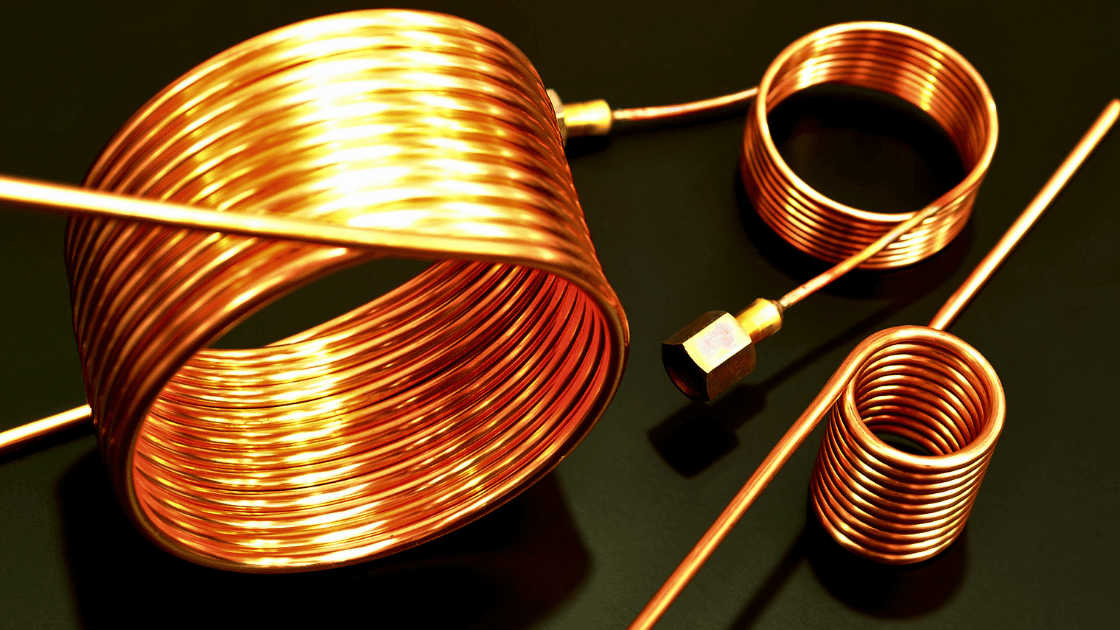
In the heat pipes cooling system inside the copper pipe there is a wick structure and the core is filled with a cooling liquid.
When the copper pipe becomes hot, the heat gets transferred to the liquid all the way through the wick. The liquid gets hot and starts to evaporate. The vapours start flowing to the other end of the heat pipe and from there it enters the wick, starts to cool down and re-enter the core of the heat pipe to become liquid again.
This cycle keeps on happening unless all the heat is dissipated from the heat pipes. The process of liquid vaporising and cooling back into the liquid form is very fast and continuous.
Different Types Of Heat Pipes
- Flat Heat Pipes

A flat heat pipe for cooling has a flat surface rather than cylindrical and this gives more surface area to stay in contact with a heated surface.
Applications
- Laptops and desktops cooling.
- Electric vehicle battery cooling.
- Servers, data centers, and LED lighting thermal management.
Pros and Cons
- Better thermal conductivity.
- Thin and lightweight design.
- Passive cooling means quit and no moving parts.
- Limited cooling capacity.
- Expensive than traditional heatsinks.
- Loop Heat Pipes

In loop heat pipes, the heat pipe is made in a circuit or a loop-like structure, where the liquid is stored in a reservoir. It evaporates and the vapors pass through the heat pipe all the way through a condenser where it becomes liquid and gets stored back in the reservoir; hence the name loop heat pipes.
Applications
- Satellite thermal management.
- Cooling systems in heavy machineries.
- Aerospace thermal management.
- Medical devices like MRIs cooling systems.
Pros and Cons
- Capillary action allows working in any orientation.
- Passive cooling- quiet and no moving parts.
- No external power needed.
- Complex manufacturing process.
- Rigid design.
- Wick damage can make the heat pipe useless.
- Vapour Chamber Heat Pipes

This type of heat pipe is a flat plate that has wick around its perimeter just below the copper plate. The heat enters from one side of the plate, forcing the liquid to evaporate and flow upwards the heat pipe. It cools down to liquid and settles at the bottom and the cycle continues.
The core of the plate has a chamber-like room for vapours to rise above and settle down; hence the name vapour chamber heat pipe.
Applications
- High-performance PCs like gaming and overclocking PCs.
- Tablet and smartphone cooling where device thickness is very limited.
- Electric vehicle thermal management.
Pros and Cons
- Gives uniform cooling throughout the cooling plate.
- Very thin and ideal for devices where device thickness is a great concern.
- It can work in literally any orientation.
- The manufacturing process needs to be very precise.
- Even a slight bend in the vapour chamber can make the heat pipe useless.
- Heat Pipes With Heat Sinks

When we attach a heat sink to a heat pipe, it becomes heat pipes with heatsinks. The heatsink can have a cooling fan on the top as well but that may not be mandatory. This is just an advanced variation of a heatsink, though.
Applications
- General purpose PCs and IT equipment cooling where limited space is not an issue.
- Aerospace and aviation cooling systems.
- Generic cooling in almost all industries.
Pros and Cons
- It has a limited cooling capacity.
- Better cooling than traditional heatsinks.
- Heat Pipes With A Flexible Design

The casing of flexible heat pipes have a flexible design that allows it to be bent nicely without damaging or hindering its performance. To achieve a bend, the heat pipe has a section in a spring form and that is the area where we can bend the heat pipe.
Applications
- Foldable devices.
- Medical devices.
- Robotics.
- Wearable electronics like smartwatches, AR, VR systems.
Pros and Cons
- The bendable heat pipe design allows a larger heat pipe to be installed in a limited area.
- The mechanical stress is limited per square cm or mm.
- The thermal and cooling capacity is very limited, though.
What Are Heat Pipes Made Of?
Most heat pipes have a copper casing on the outside and sometimes aluminum (to reduce costs). The wick structure is made of metals like copper, aluminum, stainless steel, or even metal fibers. Finally, the working fluid can be water, or even acetone (for high thermal conductivity), refrigerants, or fluorinated liquids, depending on the required thermal conductivity.
Heat Pipe Materials For Special Purposes
- Stainless Steel: Used in harsh environments for its anti-corrosion properties.
- Nickel: Used in nuclear and space systems because of its high-temperature resistance.
- Ceramic: Used in extreme environments due to its insulation properties.
Applications Of Heat Pipes
- Consumer Electronics
Consumer electronics like laptops, smartphones, gaming consoles, and high-performance computers make heavy use of heat pipes because these devices generate a lot of heat and the only reliable option is a heat pipe to dissipate all that heat.
- Automotives & HVAC Systems
In vehicles, heat pipes are used in cooling down the batteries and sometimes engines as well. Furthermore, in HVAC systems, the heat pipes act as heat exchangers that let air conditioners run smoothly.
- Renewable Energy Setups
Solar panels, geothermal systems, and energy storage systems all use heat pipes to stay cool because they generate a lot of heat when producing energy.
- Spacecrafts & Aerospace
Satellites, space probes, and aircrafts operate in extreme and harsh environments and they need heat pipes that are made of special materials to stay cool.
Heat Pipes Vs. Other Cooling Systems
- Heat Pipe Vs. Vapour Chambers
In heat pipes, the heat is sent to a distance to cool down via cooling liquid but in cooling chambers, the heat is spread evenly to dissipate it.
Ideal uses of a heat pipe are when we want to transfer heat to a long-distance like in laptops, but vapour chambers are best when we need to dissipate heat in compact devices like tablets, smartphones.
- Heat Pipes Vs. Traditional Cooling Fans
Heat pipes use evaporation to drop the heat levels in a device, meaning high efficiency but a traditional fan simply blows air with force. So, the fan will blow air whose temperature is the same as the ambience, which means poor cooling efficiency, and is hence best for general purpose PCs.
- Heat Pipes Vs. Thermoelectric Coolers (TECs)
TECs use electricity to drop the temperature but heat pipes don’t need electricity to dissipate heat. TECs are best for removing heat on a small scale like electronics projects. TECs have one heating surface and one cooling surface and need a heatsink and a fan attached to the heating surface to keep it working.
Factors To Consider When Selecting A Heat Pipe

- Thermal Performance
If your device produces a lot of heat, you should consider a heat pipe that can dissipate that heat such as ceramic, copper, or perhaps nickel for high thermal performance.
- Size
Compact devices need vapour cooling chambers or flexible heat pipes depending on the casing and the size of the equipment.
- Weight
If weight is a major concern in your project, you need to consider the weight of the heat pipe as well. In that case, consider aluminum heat pipes.
- Cost
Nickel, stainless steel, and titanium are some of the most expensive materials used in heat pipes. Copper and aluminum are the most common and affordable options, though.
- Compatibility With The Material
Consider what material you need to cool with the heat pipes because not all materials are compatible with each other. For example, if there is electrical conductivity in the heating zone, then consider ceramic heat pipes due to their insulating properties.
- Other Environmental Factors
Copper, stainless steel, aluminum, etc. are not fit for harsh environments. Consider nickel, ceramic, titanium, or composite materials.
Conclusion
Heat pipes need to be manufactured with excellence and high precision because even a slightest defect at a microscopic level can hinder efficiency or make it useless and that is where Jiujutech comes into play. If you need solutions for cooling with heat pipes, then companies like Jiujutech have decades of experience and excellence in efficient heat pipe manufacturing for different heat pipe applications whether it is a vapour cooling chamber, flexible heat pipes or flat heat pipes, etc.
If there are other heat pipe types in your mind, these industries may suggest Heat pipe design and heat pipe materials based on custom requirements.