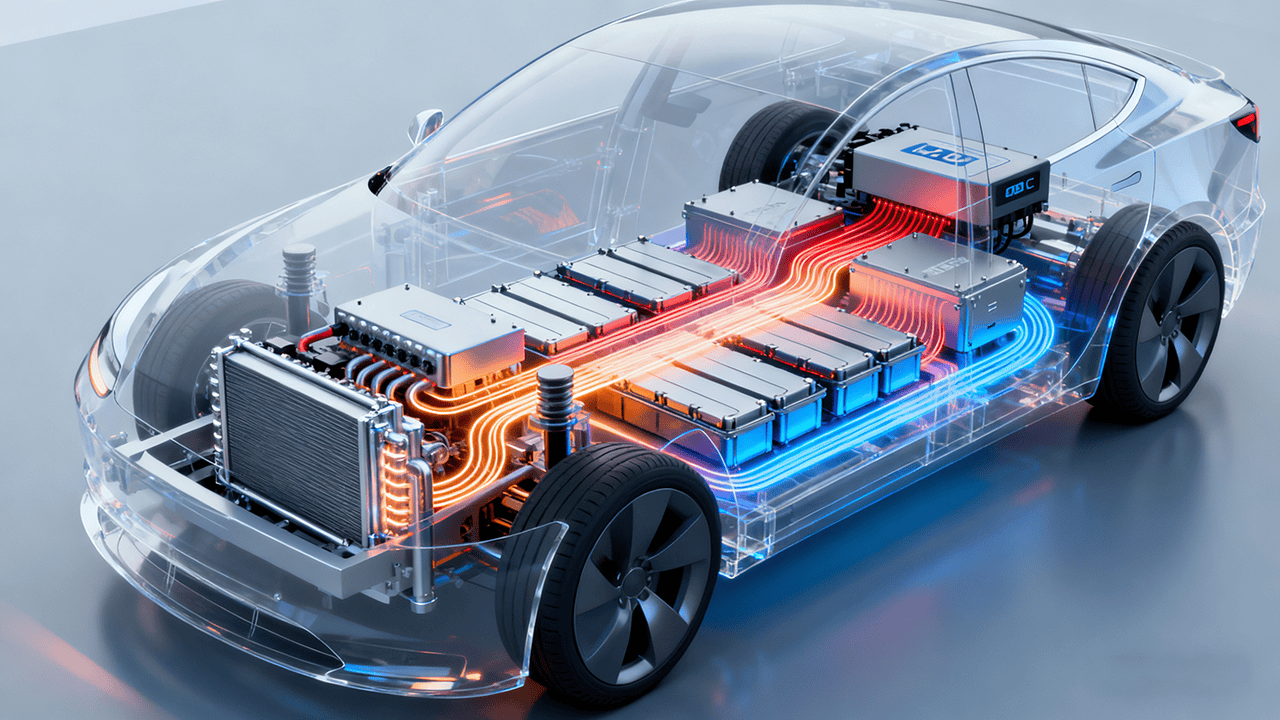
Electric vehicles are pushing the limits of physics. More power. Faster charging. Tighter spaces. Every extra watt turns into heat and managing that heat is what decides how well a vehicle performs.
That’s where thermal management comes in. Within each New Energy Vehicle (NEV), the battery, inverter, and on-board charger are all confronted with the challenge of eliminating heat without jeopardizing electrical safety. Cooling systems do the heavy lifting but the real magic happens in a layer most people never see: the Thermal Interface Material (TIM).
TIMs establish a smooth pathway for heat to escape by filling the small air gaps between parts and cooling plates. The right one keeps batteries healthy, prevents inverter failure and protects high-voltage systems.
In this guide, we’ll explore how TIMs shape the future of NEV design, how they work, where they’re used, how to choose them, and what makes the right application so critical for performance, safety, and reliability.
The Role of TIMs in NEV Thermal Management
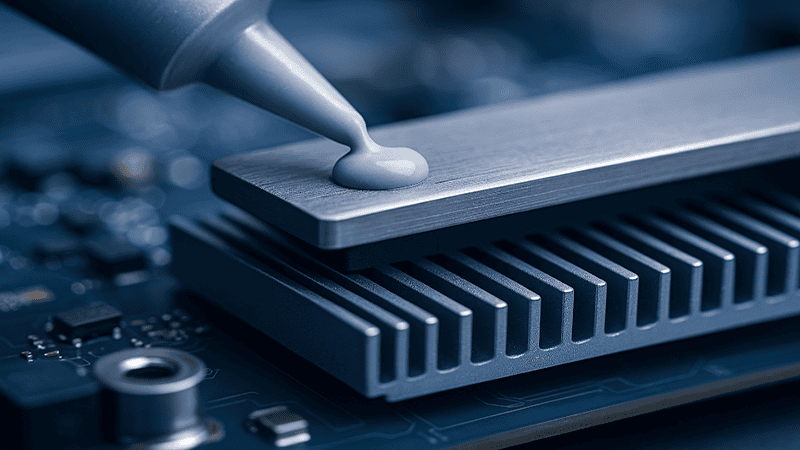
Thermal Interface Materials are the quiet heroes of every modern New Energy Vehicle. They don’t get the attention, but everything relies on them. Without proper heat flow, even the best designed batteries and power modules start to struggle. Performance dips, efficiency drops and long term reliability suffers.
A good TIM keeps everything balanced. It moves heat smoothly from the source to the cooling path while keeping electrical insulation and mechanical stability. In the modern day high power designs, that thin layer often decides whether a vehicle performs at its best or fails under load.
Safety and Reliability
Excess heat is more than an inconvenience. It is a safety threat. Lithium-ion batteries are sensitive to temperature swings. When one cell overheats, it can trigger a chain reaction called thermal runaway. TIMs stop that from happening.
By filling tiny gaps and spreading heat evenly, they prevent hot spots from forming in the first place. That even temperature keeps modules stable and reduces the risk of component failure. Consistent cooling also protects high voltage circuits from dielectric stress, keeping the system safe and predictable.
Performance and Longevity
Every component in a New Energy Vehicle has an ideal temperature window. For batteries it is around 20 to 40 degrees Celsius. Stay within that range and everything runs smoother. Charge rates are faster. Efficiency is better. The system lasts longer.
TIMs make that possible. They reduce thermal resistance between surfaces so heat can get out faster. Less heat means less wear, fewer electrical faults and longer life across the entire powertrain.
Efficient and Integrated Design
Modern NEVs pack a lot of power into small spaces. That requires perfect thermal design. By improving heat transfer, TIMs allow engineers to shrink housings, lighten enclosures and still meet performance targets.
In new cell-to-chassis battery designs, thermally conductive adhesives even act as structural reinforcements. They bond components, distribute stress and remove heat at the same time. In many cases they replace traditional bolts and brackets altogether.
TIMs have become more than heat conductors. They are design tools for the next generation of efficient, safe and compact New Energy Vehicles.
TIM Applications in Key NEV Modules

Real performance lives at the interfaces. In battery packs, inverters, motor drives, and On-Board Chargers (OBCs), the right TIM turns rough contact into a clean thermal path. That means lower resistance, tighter temperature control, and safer operation under fast charge and heavy load. Authoritative reviews show that thermal management is a system problem, not a single part fix. TIMs sit at the heart of that system by coupling heat sources to cold plates and sinks while preserving insulation. This is the layer that enables higher power density and smaller packages without sacrificing safety or life.
Here’s how TIMs work inside each of the core NEV modules that keep modern vehicles running cool and reliable:
Battery Pack Design
Battery packs only thrive when every cell runs at a similar temperature. In real driving, that rarely happens. Fast charging, spirited acceleration, and tight packaging create hot spots. Cells swell and contract as they heat and cool, which adds mechanical stress and slowly chips away at capacity and safety margins.
High compliance gap filling Thermal Interface Materials fix this at the source. They sit between the cells or modules and the cooling plate. They flow into tiny voids that trap air, then hold a consistent bond line under pressure. Heat moves out evenly. Vibration is cushioned. Expansion is absorbed without prying parts apart. The whole pack stays calmer and more predictable under load.
This is now a cornerstone of modern pack engineering. You get smoother temperature maps, better fast charge behavior, and longer cycle life.
Power Electronics (Inverters and Motor Drives)
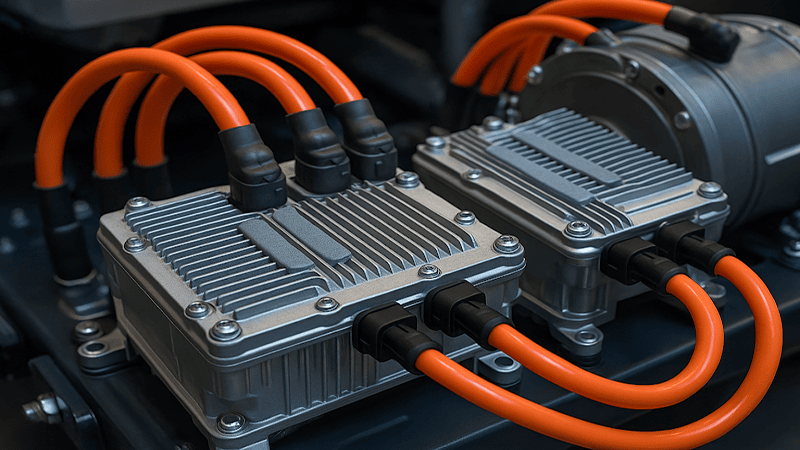
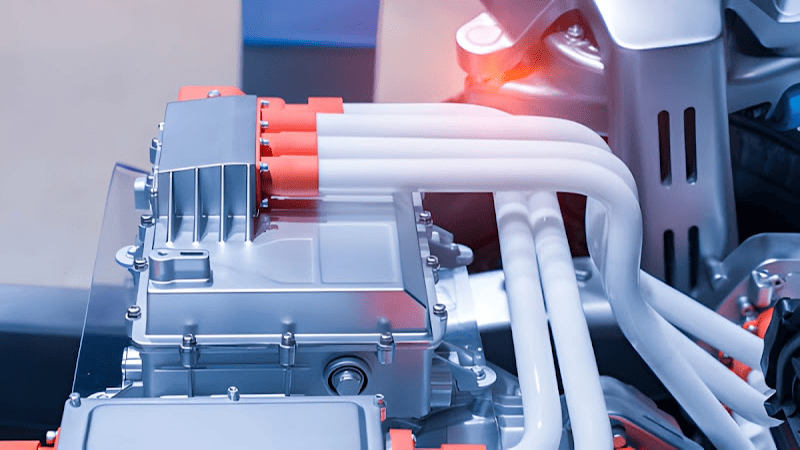
Inverters and motor drives are where power becomes motion. They handle extreme current and voltage in tight spaces, turning electrical energy into mechanical output with precision. That efficiency comes at a cost. It generates intense, localized heat. Without control, that heat shortens component life and increases the risk of insulation breakdown.
The challenge here is twofold: move heat quickly and keep electricity contained. This is where the combination of thermal grease and insulating gaskets shines.
Why it works:
- Thermal grease spreads smoothly between the module and the heat sink. It fills the tiny air gaps that block heat flow and helps the surfaces make full contact.
- Insulating gaskets add a safety layer that keeps high voltage where it belongs and stops any chance of arcing or shorting.
- Together, they move heat out fast while keeping electricity fully contained. The result is cooler, safer, and longer-lasting power electronics.
This setup keeps temperatures low, boosts safety, and helps modules last longer. For more on this dual-layer method, see our article High-Power Electronic Module Cooling Strategies for real examples and results.
On-Board Chargers (OBCs)
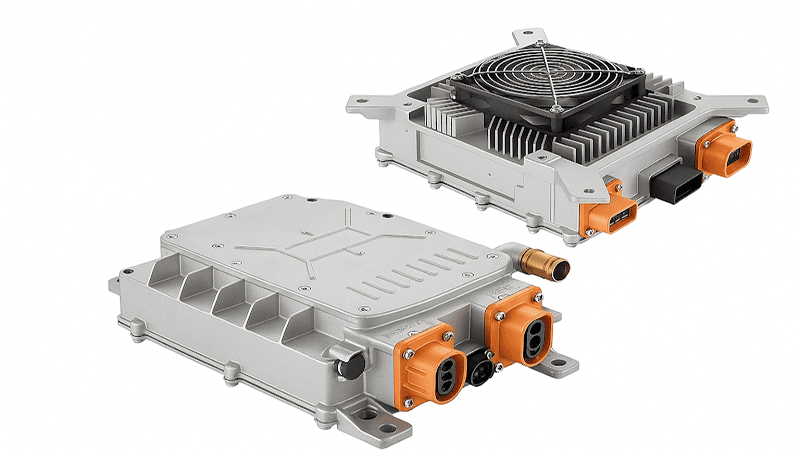
The on-board charger is the gateway between the grid and the battery. It converts AC from the wall into DC for storage. That sounds simple, but inside the housing it is a thermal and electrical puzzle. Power levels keep rising while space keeps shrinking. Modern OBCs operate at 400 to 800 volts, which means every component must stay cool and perfectly insulated.
Traditional greases and pads often struggle here. They can trap air or lose strength under voltage stress. Engineers now turn to ceramic-filled adhesives and silicone-free pads. These materials conduct heat efficiently while providing strong dielectric protection.
Ceramic fillers spread heat evenly across small circuits. Silicone-free pads prevent outgassing that can contaminate sensitive electronics. Together they keep thermal and electrical balance even under continuous high voltage.
How to Select the Right TIM
Choosing the right Thermal Interface Material starts with a clear framework. Pick the right material. Match it to the interface gap and surfaces. Design the manufacturing process. Then validate the performance.
Key Parameters to Check
- Thermal conductivity: How fast heat flows through the TIM.
- Compliance: How well the material conforms to rough surfaces and absorbs movement.
- Dielectric strength: How much voltage the material can resist without breakdown.
- Process compatibility: How well the material fits with your manufacturing flow (dispensing, bonding, curing).
Practical Decision Flow
- Define the material type (grease, pad, adhesive).
- Identify interface type (flat plates, gap-filled, modules).
- Choose the manufacturing process (manual application, automated dispensing, compression assembly).
- Validate performance with tests and simulations (contact resistance, reliability).
Module-Specific Priorities
- Battery packs — Top needs: compliance and reworkability.
- Inverters / motor drives: Require both high conductivity and strong dielectric protection.
- On-board chargers (OBCs) : Prioritize dielectric safety above all else.
Testing & Validation
Always validate with standard methods. For example, use ASTM D5470 to measure thermal resistance and IEC 60664 for dielectric breakdown strength. Perform thermal-cycling, humidity and vibration tests to ensure the TIM survives real-world stress. Research confirms that failing at these tests is a common root cause for TIM-layer failures.
How to Apply TIMs the Right Way
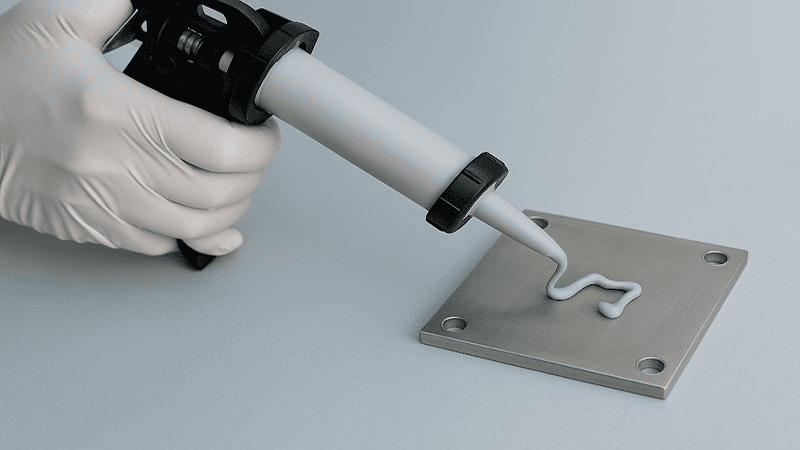
Getting the right material is only half the battle. Application is the other half.
- Surface Preparation: Always start with clean, flat, oxide-free surfaces. Even a little contamination can reduce heat transfer by up to 20%.
- Application and Dispensing:Apply using controlled methods like screen printing, pad lamination or automated dispensing. Keep bond-line thickness uniform and avoid air voids that trap heat.
- Assembly and Curing: Apply even pressure for pads and gels. Follow correct curing profiles for adhesives to prevent delamination or stress buildup.
- Quality Inspection and Validation: Use infrared thermography or X-ray to detect voids and uneven contact. Test long term reliability with thermal cycling and vibration testing.
Bad application especially in inverters and OBCs leads to local hot spots and early failure. In precision systems how you apply the TIM matters as much as which TIM you choose.
Next Course of Action?
You’ve seen how the right TIM can change everything. Better heat flow. Safer operation. Longer system life. Now it is time to put that knowledge to work.
At Jiujutech, we create thermal interface materials built for real performance — gap fillers, greases, and ceramic adhesives designed for the demands of modern New Energy Vehicles. Every product is tested for conductivity, compliance, and dielectric safety so your systems stay stable no matter the load.
If you’re ready to build cooler, smarter, and more reliable NEVs, explore Jiujutech’s thermal solutions and see what precision engineering can do.
FAQs
1. What exactly is a TIM?
A Thermal Interface Material (TIM) is a thin, heat-conductive layer that helps transfer heat from electronic components to cooling plates. It keeps parts cool, stable, and operating efficiently over time.
2. Why do New Energy Vehicles (NEVs) need TIMs?
Because higher power generates more heat. TIMs prevent batteries, inverters, and other electronic modules from overheating, helping maintain energy efficiency, safety, and reliability.
3. How often should a TIM be replaced or inspected?
It depends on the system design. In sealed modules, a TIM can last for many years. For serviceable components like power controllers, regular inspection during maintenance is recommended to ensure consistent thermal performance.
4. Does Jiujutech offer technical support?
Yes. Jiujutech provides expert technical guidance to help engineers select and apply the most suitable thermal materials for their specific applications and performance requirements.