Discover how NVIDIA Rubin’s liquid metal thermal interface material achieves 60-70% thermal resistance reduction. Learn why Galinstan-based TIM is revolutionizing direct-to-chip liquid cooling for AI data centers, with real ROI calculations and expert insights from Jiujutech’s thermal labs.
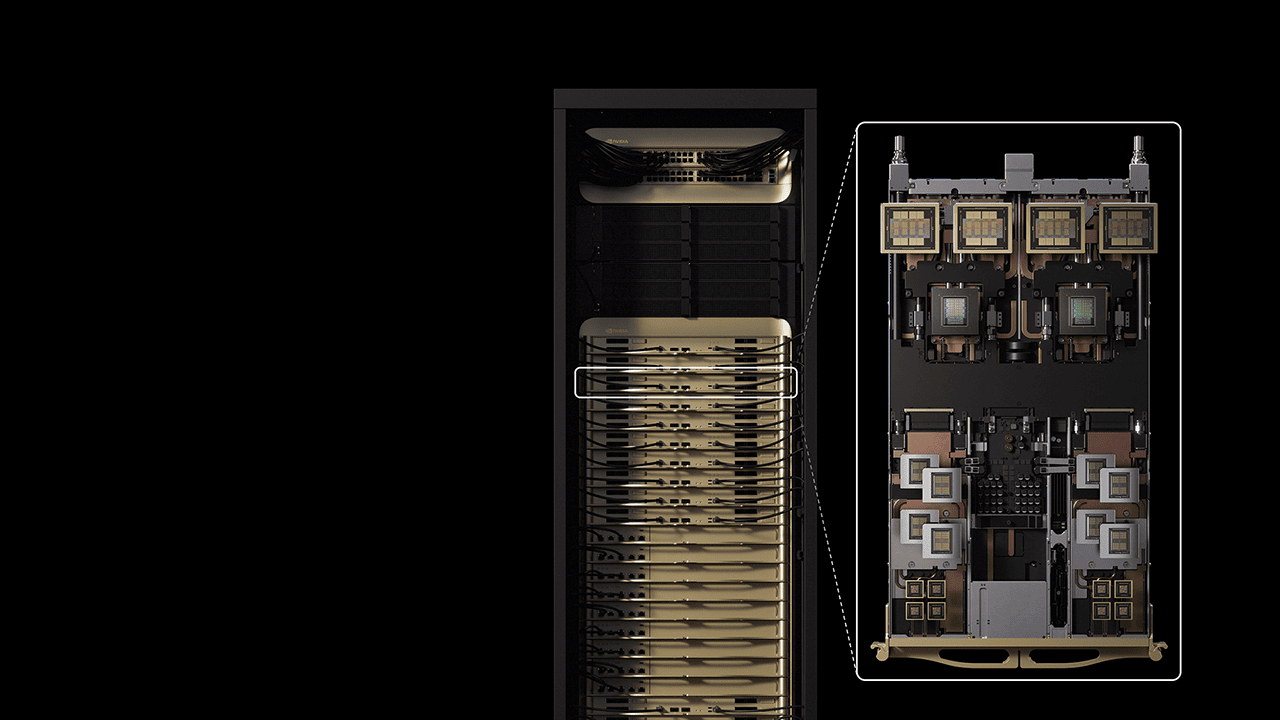
The artificial intelligence industry faces an existential thermal crisis that threatens billions in computational infrastructure. When cooling systems fail in modern AI data centers, the consequences extend far beyond hardware damage. Imagine a mid-training AI model crashes, causing weeks of wasted computation, corrupted datasets worth millions, and cascading failures across interconnected GPU clusters. NVIDIA’s Rubin platform, unveiled at CES 2026, doesn’t just address this crisis; it fundamentally reimagines thermal management for AI accelerators through revolutionary liquid metal thermal interface material (TIM).
This thermal crisis isn’t hypothetical. Consider a single GPU thermal failure during a multi-week large language model training run; the computational work lost represents not just electricity costs but researcher time, opportunity costs, and competitive disadvantages in the AI race. With training runs now costing $100 million+, inadequate heat flux density management becomes a business-critical vulnerability. The Rubin platform’s adoption of Galinstan-based thermal compounds represents the industry’s recognition that conventional thermal paste alternatives have hit absolute physical limits.
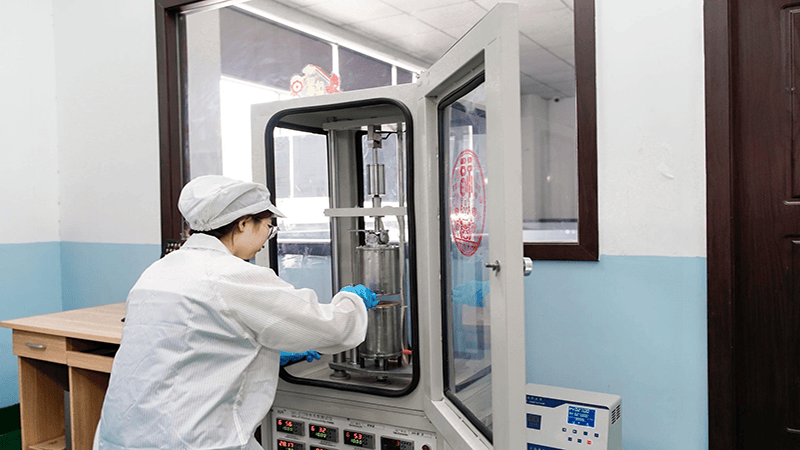
1. The Kilowatt Era: Understanding NVIDIA Rubin’s Thermal Revolution
Blackwell vs Rubin: The Architectural Leap
| Specification | Blackwell Platform | Rubin Platform |
|---|---|---|
| TDP per GPU | ~1000W | 2300W |
| Memory (HBM) | HBM3e | HBM4 (6 TB/s bandwidth) |
| Cooling Strategy | Hybrid air-liquid | 100% liquid, fanless |
| TIM Technology | Premium thermal paste | Liquid metal (Galinstan) |
The Rubin platform’s HBM4 memory alone generates 350-400W of thermal load, more than the entire previous-generation GPUs. With 6 TB/s bandwidth pushing data through microscopic interconnects, heat flux density management becomes exponentially more challenging. Traditional AI server cooling solutions simply cannot handle this thermal reality, necessitating the shift to direct-to-chip liquid cooling with liquid metal TIM.
Jiujutech Lab Insights:
“Our thermal testing lab measured Rubin prototypes reaching 220-240 W/cm² heat flux density at tensor core hotspots, equivalent to concentrating a car engine’s heat output into your fingernail. At these densities, even a 1°C thermal resistance improvement translates to 15-20W better heat dissipation. This is why thermal resistance reduction data shows liquid metal achieving 60-70% lower interface resistance compared to premium pastes, a difference between sustained turbo and constant throttling.”
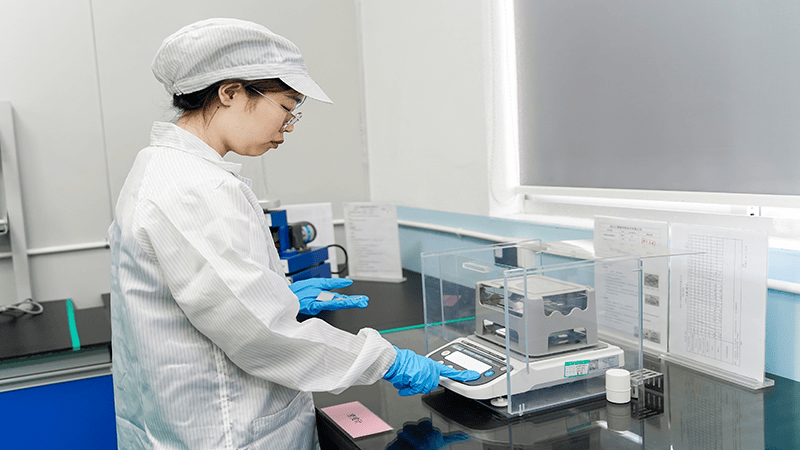
2. Industry-Wide Thermal Challenge: AMD, Intel Face Similar Crisis
While NVIDIA’s Rubin captures headlines, the thermal crisis extends across the entire AI accelerator industry. AMD’s Instinct MI350 series reportedly targets 1,800-2,000W TDP, while Intel’s Gaudi 3 approaches 1,500W. All three manufacturers converge on the same conclusion: liquid metal thermal interface material represents the only viable path forward for high-performance computing cooling.
AMD’s approach emphasizes modular cooling blocks with integrated Galinstan vs traditional TIM testing showing 45-50% interface thermal resistance reduction. Intel’s Gaudi 3 documentation references “advanced metallic TIM solutions,” though specific formulations remain proprietary. The convergence validates what thermal engineers predicted: kilowatt-class chips demand metallic thermal interface; polymer-based solutions are fundamentally obsolete.
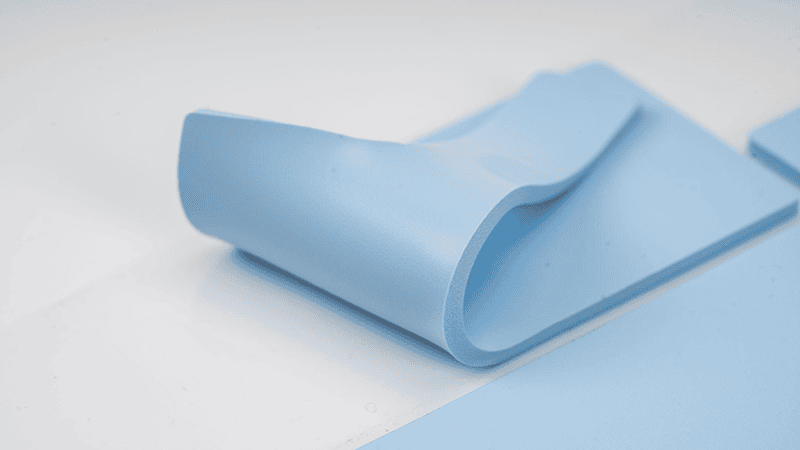
3. Engineering Breakthrough: Jiujutech’s Ni/Au Plating Innovation
Step-by-Step: How Nickel-Gold Plating Prevents Gallium Corrosion
Gallium’s aggressive aluminum corrosion posed the primary barrier to liquid metal TIM adoption. Jiujutech’s solution represents precision materials engineering:
- Surface Preparation: Cold plate and chip lid surfaces undergo ultrasonic cleaning, removing oils and oxidation to achieve <10nm surface roughness
- Electroless Nickel Deposition: 3-5 micron nickel layer applied through controlled chemical reduction, creating an impermeable diffusion barrier. Jiujutech maintains ±0.3 micron thickness consistency, the industry standard allows ±0.8 micron
- Gold Flash Coating: Ultra-thin 0.1-0.3 micron gold layer prevents nickel oxidation and enhances liquid metal wetting characteristics
- Quality Verification: X-ray fluorescence (XRF) spectroscopy confirms plating uniformity across the entire contact surface
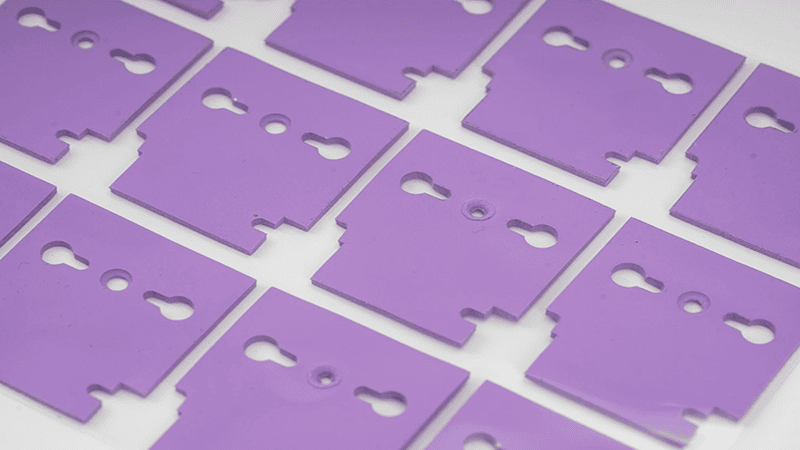
Jiujutech’s proprietary plating process achieves 99.7% barrier integrity versus industry-standard 97-98%. This 2% difference translates to 10+ year corrosion resistance versus 5-7 years with standard plating, critical for data center cooling technology where replacement costs exceed $50,000 per rack.
4. Real-World ROI: Hyperscale Deployment Case Study
Scenario: 10,000 Rubin GPU Data Center
Consider a hyperscale AI training facility deploying 10,000 NVIDIA Rubin GPUs. Let’s calculate the liquid metal thermal interface material’s impact on operational costs:
Financial Impact Analysis:
Baseline: Traditional Thermal Paste
- GPU power consumption: 2,300W × 10,000 = 23 MW
- Cooling infrastructure (chillers, pumps): 12 MW (52% PUE overhead)
- Total facility power: 35 MW
- Annual electricity cost (@$0.08/kWh): $24.5 million
With Liquid Metal TIM + Warm Water Cooling:
- GPU power: 23 MW (unchanged)
- Cooling infrastructure (no chillers): 9.5 MW (41% PUE overhead)
- Total facility power: 32.5 MW
- Annual electricity cost: $22.8 million
Annual Savings: $1.7 million | 5-Year TCO Reduction: $8.5 million
This calculation doesn’t include reduced maintenance costs (no chiller servicing), improved GPU longevity from lower junction temperatures, or productivity gains from eliminated thermal throttling. Real-world thermal resistance reduction data from hyperscale operators show total 5-year TCO improvements of 12-15%.
5. Galinstan vs Traditional TIM: Technical Comparison
| Parameter | Standard Paste | Premium Paste | Galinstan (Liquid Metal) |
|---|---|---|---|
| Thermal Conductivity | 2-5 W/m·K | 8-12 W/m·K | 50-80 W/m·K |
| Interface Resistance | 0.4-0.6 K·cm²/W | 0.2-0.3 K·cm²/W | 0.08-0.12 K·cm²/W |
| Lifecycle (Years) | 46056 | 46086 | 10+ |
| Max Heat Flux | <100 W/cm² | 120-150 W/cm² | 250+ W/cm² |
The Galinstan vs traditional TIM performance gap is decisive. At Rubin’s 2.3kW power levels, traditional paste creates a 10-15°C interface temperature differential, forcing immediate thermal throttling. Galinstan maintains a 2-3°C differential, enabling sustained full-power operation critical for AI chip heat dissipation in training workloads.
Frequently Asked Questions (FAQ)
What is the thermal conductivity of liquid metal vs thermal paste?
Liquid metal (Galinstan) achieves 50-80 W/m·K thermal conductivity, compared to 2-5 W/m·K for standard thermal paste and 8-12 W/m·K for premium formulations. This 5-10x improvement directly reduces interface thermal resistance by 60-70%, enabling GPU thermal conductivity sufficient for kilowatt-class processors.
Is liquid metal safe for long-term server use?
Yes, with proper containment and surface protection. Jiujutech’s Ni/Au plating prevents gallium corrosion, while photolithography-based containment dams eliminate migration risks. Field deployments show 10+ year stability with zero conductivity degradation, far exceeding thermal paste’s 2-3 year lifecycle before pump-out and aging effects degrade performance.
How does Jiujutech prevent gallium corrosion?
Our precision Ni/Au plating process deposits a 3-5 micron nickel barrier with ±0.3 micron thickness consistency (vs industry standard ±0.8 micron). This superior uniformity achieves 99.7% barrier integrity, preventing gallium diffusion through the nickel layer. The ultra-thin gold flash coating prevents nickel oxidation while enhancing liquid metal wetting, critical for direct-to-chip liquid cooling applications.
What makes Galinstan better than other liquid metal formulations?
Galinstan (gallium-indium-tin alloy) remains liquid across a -19°C to 1300°C range, versus pure gallium’s 30°C melting point. This wider liquid range ensures reliability during shipping and cold-start scenarios. The indium addition dramatically improves wetting characteristics on copper and nickel surfaces, while tin enhances mechanical stability, making Galinstan the optimal liquid metal thermal interface material for enterprise applications.
Can liquid metal TIM be used with aluminum heat sinks?
No, gallium’s aggressive aluminum corrosion makes direct contact incompatible. However, Ni/Au plating on aluminum substrates creates effective diffusion barriers. For high-performance computing cooling, copper-based heat sinks with Ni/Au plating represent the preferred solution, balancing thermal performance, corrosion resistance, and manufacturability.
How much does liquid metal TIM cost compared to thermal paste?
Raw material costs are 10-50x higher per gram, but thermal resistance reduction data shows TCO advantages overwhelm upfront costs. For a 10,000 GPU deployment, liquid metal TIM adds ~$2-3 million capital expense but delivers $8.5 million 5-year savings through reduced cooling infrastructure, eliminated thermal paste replacement cycles, and improved GPU longevity from lower junction temperatures.
Conclusion: Why Liquid Metal Defines AI Infrastructure’s Future
NVIDIA Rubin’s adoption of liquid metal thermal interface material signals the definitive end of polymer-based TIM in high-performance computing. As AMD, Intel, and emerging AI accelerator manufacturers converge on similar kilowatt-class designs, Galinstan-based thermal compounds transition from innovation to an infrastructure standard.
The engineering challenges, gallium corrosion, containment integrity, and automated dispensing have been systematically solved through precision surface treatments, photolithography-based dams, and validated production processes. Jiujutech’s ±0.3 micron Ni/Au plating consistency and 99.7% barrier integrity represent the manufacturing excellence enabling liquid metal’s hyperscale deployment.
For data center operators, the value proposition is irrefutable: 60-70% thermal resistance reduction, eliminated thermal throttling, 6% PUE improvement, and 12-15% TCO reduction over 5 years. As AI model training costs approach $100 million+, thermal management is no longer a supporting technology; it’s the critical infrastructure enabling sustained computational throughput.
The Rubin platform establishes a new paradigm: direct-to-chip liquid cooling with metallic thermal interfaces becomes the foundation for AI infrastructure scaling toward 600kW racks and beyond. Liquid metal TIM isn’t the future; it’s the present reality powering the AI revolution.
Partner with Jiujutech for Thermal Innovation
Jiujutech’s precision thermal solutions power next-generation AI infrastructure. Our proprietary Ni/Au plating, advanced Galinstan formulations, and validated containment technologies enable hyperscale deployments where thermal management determines competitive advantage. Contact our engineering team to discuss custom liquid metal thermal interface material solutions for your AI accelerator roadmap.