
Why Thermal Interface Materials Matter in AI Hardware
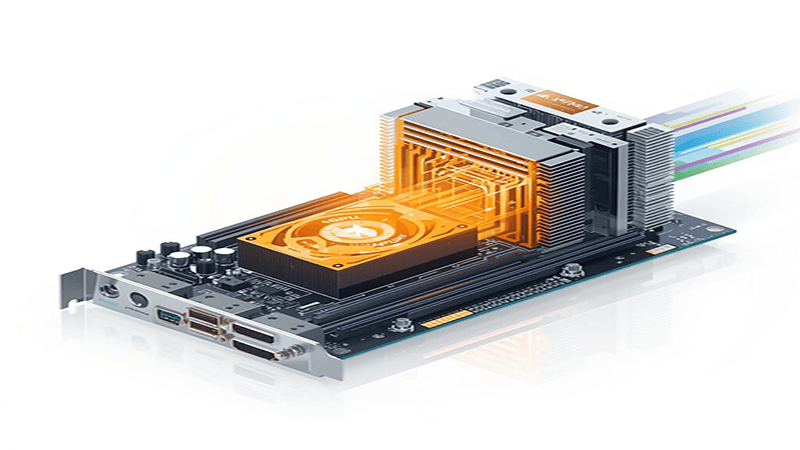
From an engineer’s view, modern high-performance hardware generates extreme heat in very small areas.such as GPUs, accelerators, HBM memory stacks, and high-power modules produce more heat than traditional cooling solutions can handle.
As seen in thermal interface materials are no longer secondary components and they are critical enablers of performance, system reliability, and long-term operating cost.Such as proper thermal interface materials reduce thermal resistance, fill microscopic gaps, and maintain stable operation under continuous workloads.
Such as Poor thermal interface materials can lead to higher junction temperatures,and reduced efficiency, performance throttling, and shorter hardware lifespan.You must selecting the right TIM early in the design process ensures that high-performance systems stay cool, run efficiently, and last longer.
In simple words, engineers working on advanced hardware must treat thermal interface materials as a core design decision, and not an afterthought.
What Are Thermal Interface Materials (TIMs)?
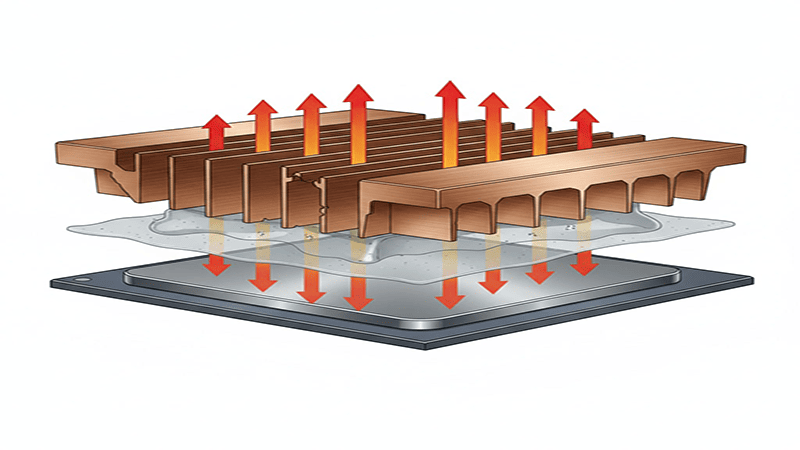
In simple words Thermal interface materials (TIMs) are important materials that engineers use between two solid surfaces to help heat move from one part to another.
As seen in they are placed between any heat-generating component and its cooling part, such as a heat sink or metal plate.And even surfaces that look flat have tiny bumps and dips. When two solids touch, small air gaps remain, and air is a poor conductor of heat. TIMs fill these gaps and reduce contact thermal resistance,and creating a more efficient path for heat.
The core roles of thermal interface materials include:
- Eliminating air gaps between mating surfaces
- Reducing contact thermal resistance
- Improving overall heat transfer efficiency
Such as where heat flux is extremely high, even minor surface imperfections can significantly increase temperatures. This makes thermal interface materials a foundational element of thermal design,and not just a supporting component.
Thermal Challenges Unique to AI Hardware
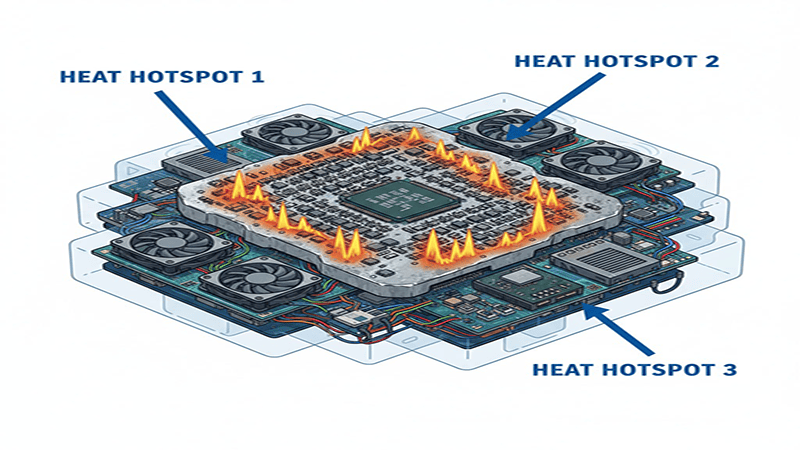
Modern AI hardware creates unique challenges for engineers, and especially in thermal management.
Such as these systems generate very high heat in small areas, and managing this heat is critical for performance and reliability.
Here are some key challenges include:
Extremely high heat flux (W/cm²)
High-performance chips, GPUs, and accelerators generate a lot of heat in small areas, and also this high heat flux also makes cooling more difficult and puts more stress on thermal interface materials.
Large package sizes with uneven surfaces
Even large components rarely touch perfectly flat surfaces.
Tiny gaps form, which reduce heat transfer and require careful TIM selection.
Dynamic and sustained workloads (training vs inference)
Training AI models produces a constant heavy load, while inference can still generate heat for long periods.
This makes thermal conditions unpredictable and requires TIMs that perform reliably under changing loads.
Tight mechanical tolerances and dense assemblies
AI hardware often packs components closely together.
Also, small space limits cooling options and increases the importance of TIMs for effective heat transfer.
Long operating hours and high reliability expectations
AI systems often run continuously.
TIMs must maintain performance over time to prevent overheating, and throttling, or hardware failure.
But these challenges make AI hardware thermal management complex.
You must choose the right thermal interface materials to ensure devices run efficiently, stay reliable, and last longer.
Main Types of Thermal Interface Materials Used in AI Systems
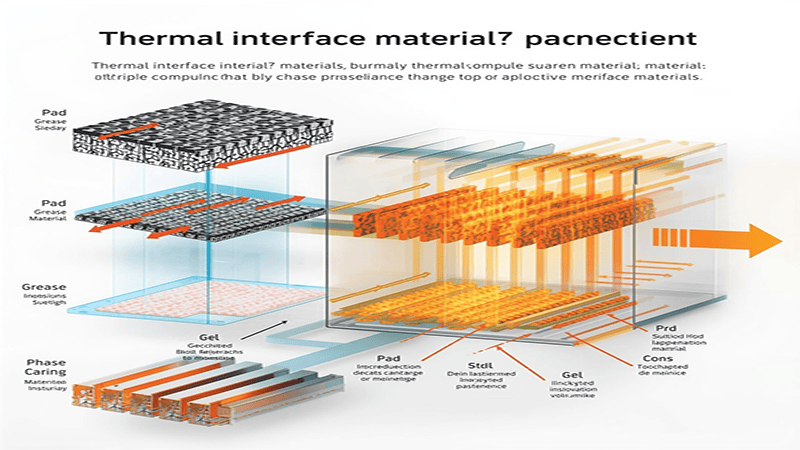
Such as modern AI systems rely on different types of thermal interface materials (TIMs) to manage heat efficiently. Also, each type has its own advantages and applications depending on the hardware design.
1. Thermal Pads: When Controlled Thickness and Reliability Matter
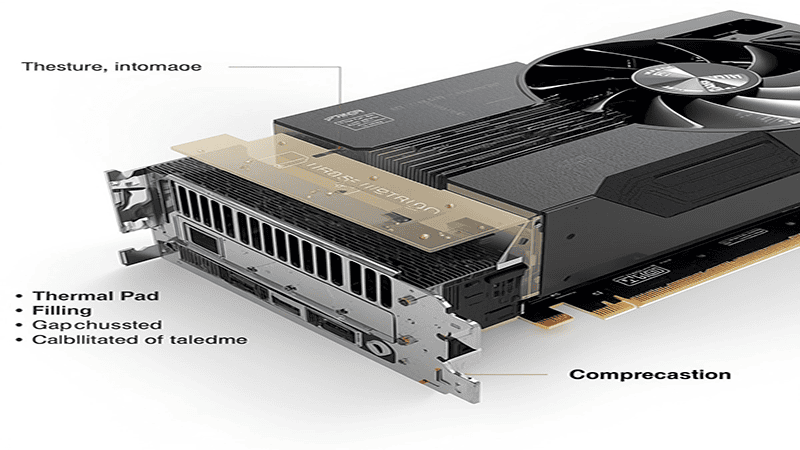
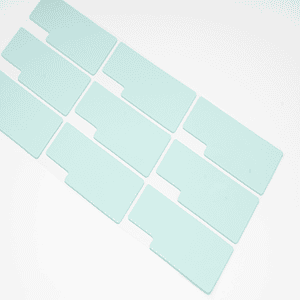
Thermal pads are solid sheets that fill gaps between components and heatsinks.
And they provide a defined thickness for better gap control and are electrically insulating.
They also help with mechanical compliance, which is useful in dense assemblies.
Typical applications include:
- GPU to cold plate
- AI accelerator to heatsink
- Power modules and VRMs
Must using thermal pads ensures reliable thermal performance in automated assembly or rework-friendly systems.
2. Thermal Grease and Paste: Maximum Conductivity, Limited Control
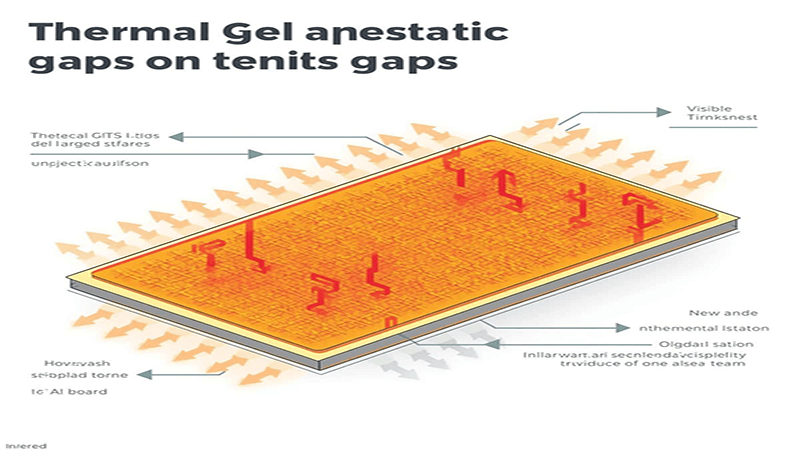
Thermal grease or paste is soft and spreads easily, and filling micro-gaps between surfaces.
It has excellent thermal conductivity, also making it ideal for high-performance heat transfer.
Limitations in AI systems:
- Risk of pump-out over time
- Inconsistent application in assembly
- Possible contamination
Grease is best for precision cooling, but it requires careful application and maintenance.
3. Gap Fillers and Thermal Gels for Large or Uneven Interfaces
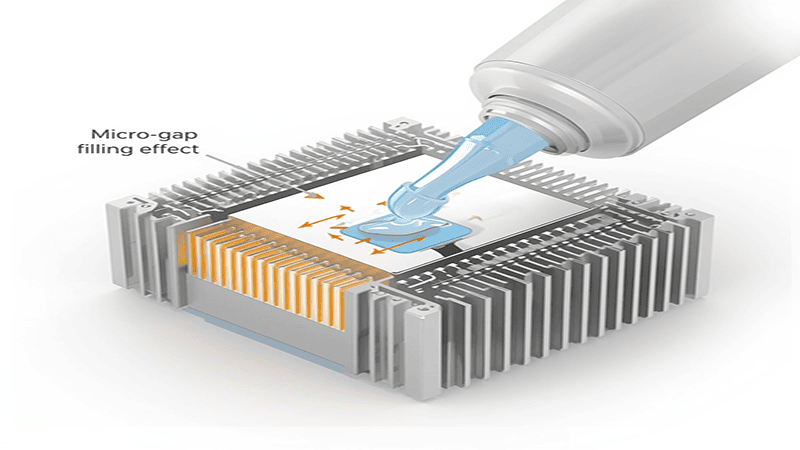
Gap fillers and thermal gels are designed for components with larger or uneven surfaces.
They adapt to complex surfaces while maintaining heat transfer efficiency.
Common uses:
- Power electronics around AI boards
- Enclosures and secondary heat spreaders
These TIMs are flexible and help manage heat where pads and grease cannot fully conform.
4. Phase Change Materials for High-Pressure, High-Cycle Applications
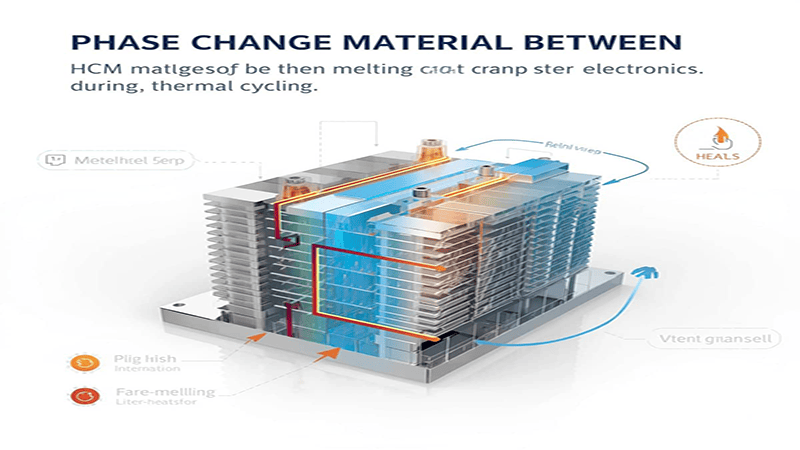
Phase change materials (PCMs) such as remain solid at room temperature and soften when heated.
They adapt to surface irregularities under operating conditions and maintain thermal performance through repeated thermal cycles.
PCMs outperform traditional greases in systems requiring high reliability and repeated thermal cycling.
How to Choose the Right Thermal Interface Material for AI Hardware
From an engineer’s point of view, selecting the right thermal interface materials (TIMs) matters because it determines how well the system stays cool, stable, and efficient over time.
Key Selection Criteria Engineers Must Evaluate
In simple words Engineers should consider these factors when selecting thermal interface materials:
Thermal conductivity vs contact resistance
Such as High thermal conductivity alone is not enough.
AlsoTIMs must make good contact with the surfaces to transfer heat efficiently.
Required gap thickness and tolerance variation
The space between components can vary.
TIMs must fit these gaps without leaving air pockets.
Compression force limitations
Some TIMs require a certain pressure to work well.
Too much or too little force can reduce efficiency.
Electrical insulation requirements
Some components need electrically non-conductive TIMs.
Like thermal pads often provide both insulation and heat transfer.
Long-term and reliability (aging, pump-out, dry-out)
TIMs must maintain performance over months or years.
Such as some materials degrade faster under continuous thermal cycling.
When Is a Thermal Pad the Best Choice?
To keep it simple Thermal pads are ideal in scenarios where:
- Automated assembly lines require consistent thickness and easy installation
- Large, flat AI packages need reliable gap-filling
- Systems may need rework or servicing without removing the TIM
If you compared to grease or gel, thermal pads are cleaner, easier to handle, and more reliable in repeated assembly or service situations.
Must using the right thermal pad can save time, improve reliability, and ensure consistent thermal performance.
Summary:
Such as selecting the right thermal interface materials is about balancing performance, and mechanical fit, insulation, and long-term reliability.
And also, early material choice helps engineers design AI hardware that stays cool, runs efficiently, and lasts longer.
Thermal Interface Materials and Long-Term Reliability in AI Systems
AI systems often run for long hours without stopping.
Because of this, engineers pay close attention to long-term reliability.
From an engineer’s point of view, thermal interface materials need to work well not only at the start, but throughout months and years of real operation.
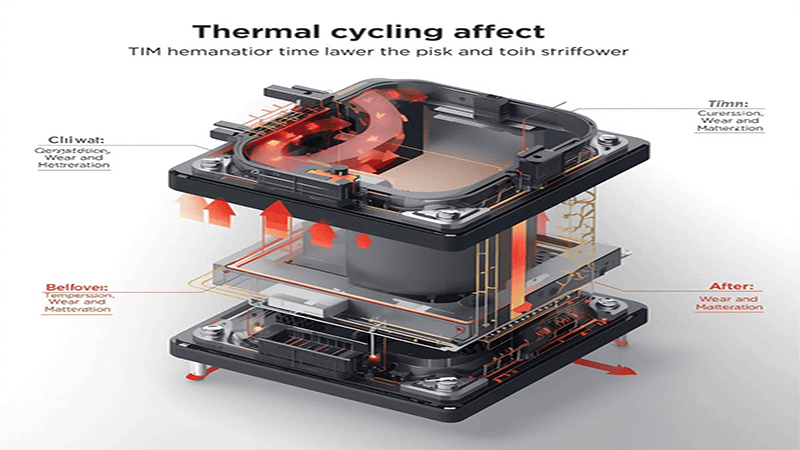
As system workloads change, heat levels naturally go up and down.
Engineers refer to this repeated heating and cooling as thermal cycling.
Over time, poor-quality TIMs can degrade.
They may dry out, shift position, or lose contact with the surface.
When this happens, heat transfer becomes less efficient.
Degraded thermal interface materials can lead to:
- Performance throttling
- Higher operating temperatures
- Shorter hardware lifespan
- Unexpected system downtime
In long-running AI systems, stability matters more than peak thermal conductivity.
A TIM that maintains contact and structure over time often performs better than one with high initial conductivity but poor durability.
This is why material stability, compression behavior, and resistance to aging are critical factors in AI thermal design.
Choosing reliable thermal interface materials helps engineers protect system performance and reduce long-term maintenance risks.
Common Mistakes Engineers Make When Selecting TIMs for AI Hardware
Choosing thermal interface materials may look simple, but small mistakes can cause serious thermal problems later.
From an engineer’s experience, many issues come from treating TIMs as minor components.
1. Focusing only on thermal conductivity
Many engineers choose a TIM just because it has a high conductivity value.
In real systems, surface contact and material stability often matter more.
2. Ignoring tolerance stack-up
Small variations in component height can create uneven gaps.
If this is not considered, the TIM may not make proper contact.
3. Underestimating compression force
Some TIMs need a specific pressure range to work correctly.
Too little or too much force can reduce heat transfer efficiency.
4. Treating all TIMs as interchangeable
Not all thermal interface materials behave the same way.
Pads, greases, gels, and phase change materials serve different purposes.
5. Overlooking long-term performance
Initial results may look good during testing.
Problems often appear later due to aging, pump-out, and material movement.
Also, avoiding these mistakes helps engineers design systems that stay stable, cool, and reliable over time.
Conclusion: Thermal Interface Materials as a Strategic Design Choice
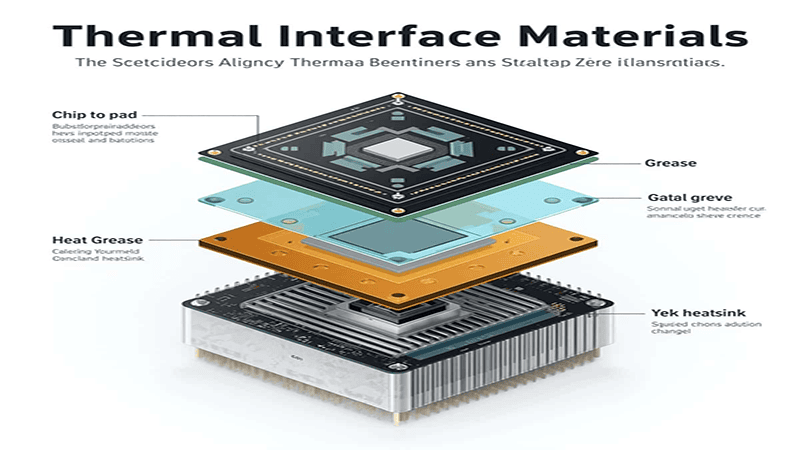
From an engineer’s point of view, thermal interface materials are not just supporting parts.
They are a core part of thermal design in modern AI systems.
AI hardware performance is closely linked to how well heat is managed.
Such as poor thermal choices can lead to higher temperatures, reduced efficiency, and shorter system life.
Also, the right thermal interface materials help bridge the gap between mechanical design and thermal performance.
Among them, thermal pads play an important role by offering controlled thickness, easy handling, and reliable long-term contact.
Such as making the right material choice early in the design process leads to better system-level results.
Also, it reduces risk, improves reliability, and supports stable performance over time.
Engineers should evaluate thermal interface materials based on real application conditions, not just datasheet values.
Careful testing, proper material selection, and application-specific evaluation help ensure long-term success in AI hardware designs.
What We See Making Thermal Interface Materials for AI Hardware Daily
As a manufacturer producing thermal interface materials for AI hardware on a regular basis, our team works closely with these materials during real production and testing processes.
The Thermal Performance Reality
On paper, many thermal interface materials show very high thermal conductivity values.
But during daily production and testing, real performance often looks different.
| Factor | What Specs Say | What We Actually See |
|---|---|---|
| Material spread | Smooth and even | Can become uneven on large AI chips |
| Thermal conductivity | Very high lab values | Drops under real mounting pressure |

Why this matters:
For AI hardware, even small thermal gaps can cause overheating. Our daily production work shows that real-world behavior is more important than just datasheet numbers.

Why Trust This Guide
This guide is created by the engineering team at Jiu Ju Tech, a company that has been manufacturing thermal interface materials since 2002. Over the years, we have developed and produced 15 different thermal products annually, supported by extensive in-house testing.
Our engineers have tested more than nine types of thermal solutions in real laboratory and production environments. The insights shared in this guide come directly from hands-on experience with these materials during daily manufacturing, testing, and application — not from theory or copied online sources.
Every recommendation here is based on what we see work reliably in real AI hardware conditions, helping readers make informed and practical decisions.