DC/DC converters are the fundamental, yet unsung, heroes of modern electronic systems. From industrial automation to telecommunications networks to the complex systems inside an EV, modern converters are marvels of electrical efficiency.
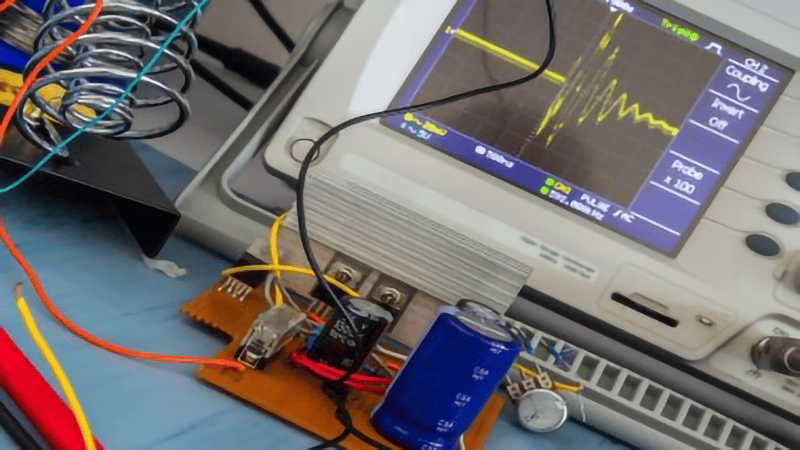
Nonetheless, they are unfortunately very thermally demanding. The inevitable byproduct of energy conversion is heat.
In this article, we break down the functions of DC/DC converters, why they generate so much heat in such a small space, where they are typically used, and how thermal pads are the best for tackling heat in converters.
What Does a DC/DC Converter Do?
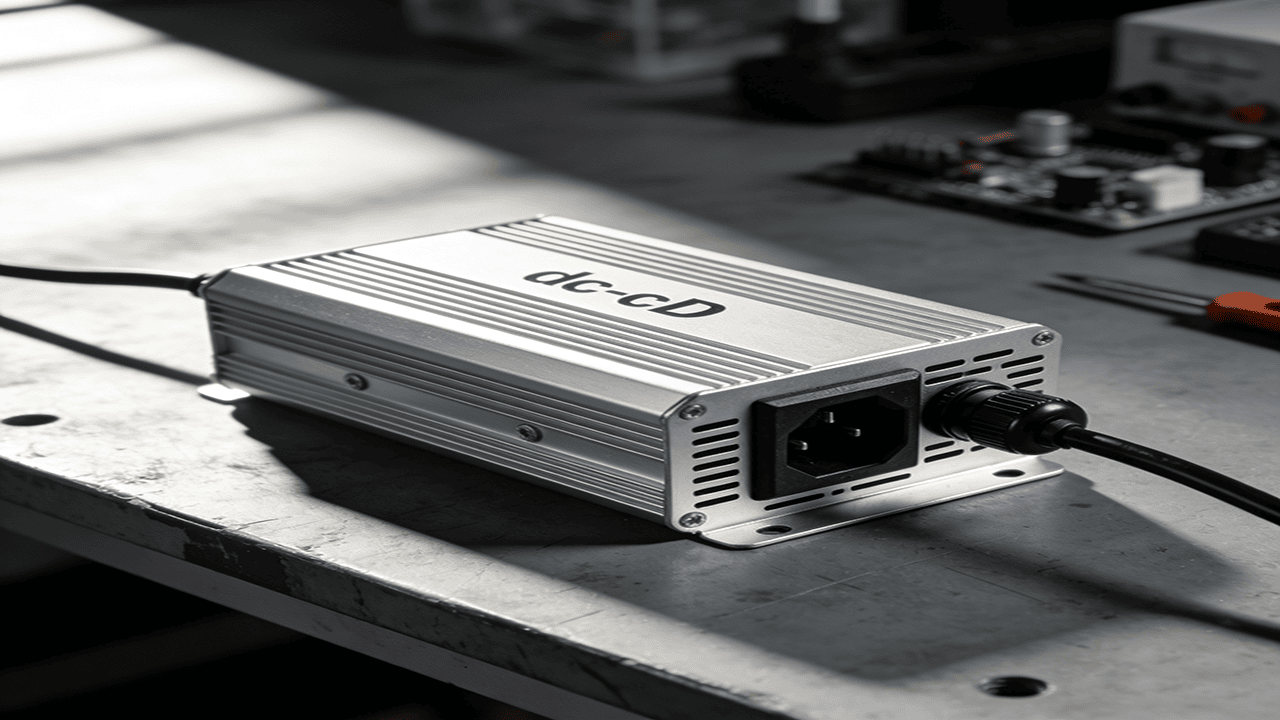
Essentially, a DC/DC converter is a power electronic circuit that converts a direct current (DC) source from one voltage level to another. It is most commonly used in solar power systems, electric vehicles, and a wide range of power systems.
The primary task of a DC/DC converter is to boost or buck the voltage to match the precise power requirements of a downstream circuit. To efficiently regulate the voltage, these converters use a combination of high-frequency switching elements like MOSFETs, inductors, transformers, and sophisticated control ICs.
Solar power systems are a prime example of their use. The voltage of a solar panel fluctuates constantly throughout the day depending on exposure to the sun.
A DC/DC converter, especially one with maximum power point tracking (MPPT), is essential because it regulates this fluctuating voltage so that a battery or device can be charged or powered at maximum efficiency.
Why Do DC/DC Converters Generate Heat?
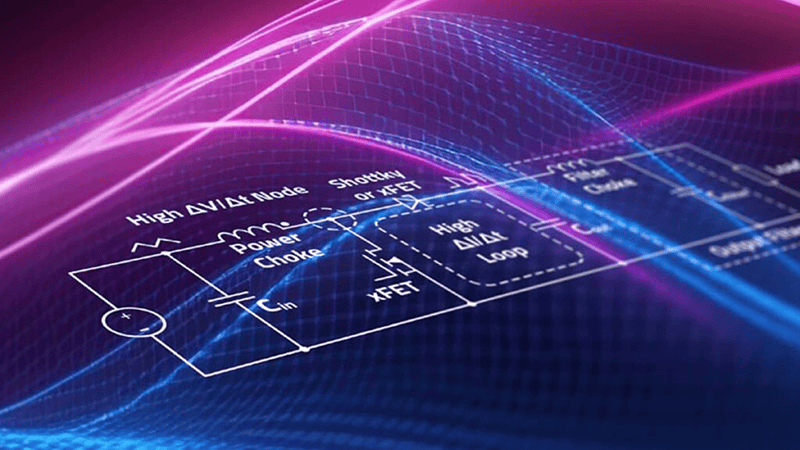
Although modern converters can achieve electrical efficiencies exceeding 90%, the remaining 5-10% of energy lost is almost entirely dissipated as heat. For a converter delivering 100 watts of power, this means that 5-10 watts of heat are continuously generated in a very small, concentrated area.
The heat generated in DC/DC converters comes from several unavoidable sources of electrical loss:
- Switching losses: The power MOSFETs that form the heart of the converter switch on and off thousands or even millions of times per second. During the brief transition between the on and off states, neither a perfect short circuit nor a perfect open circuit occurs, resulting in momentary power loss that generates significant heat.
- Conduction losses: Even when fully turned on, all power devices (MOSFETs, diodes) and passive components (inductors, PCB traces) have some internal resistance. When current flows through this resistance (I²R losses), heat is generated.
- Core losses: Magnetic components, such as inductor and transformer cores, experience energy losses (hysteresis and eddy current losses) due to rapidly cycling magnetic fields.
- Control and gate-drive losses: The integrated circuit that controls the converter and drives the MOSFET gates also consumes a small amount of energy, which is dissipated as heat..
A converter delivering 50-100 W can dissipate several watts of heat continuously. The environment an electronic unit is operating can also further increase the risk of overheating.
High ambient temperatures, sealed or fanless enclosures, and continuous high-load operation often cause converters to reach thermal shutdown limits long before electrical limits are exceeded.
Typical Applications for DC/DC Converters
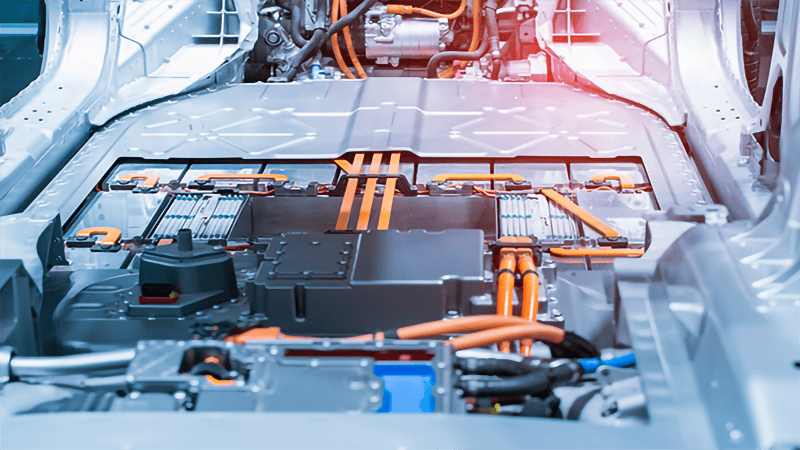
For several years, switch-mode power converters have been essential components across nearly every electronics market, from industrial and commercial to utility and consumer sectors. Let’s take a look at a few of the multiple industries where DC/DC converters play a major role.
- Industrial Electronics
In the industrial world, DC/DC converters are the workhorses that power programmable logic controllers (PLCs), motor controllers, robotic systems, and a wide range of sensors and automation equipment.
These systems are often housed in sealed, fanless enclosures to protect them from dust, moisture, and harsh chemicals. This reliance on passive cooling means that efficient heat conduction is not just a feature, but a survival requirement.
DC/DC converters efficiently manage power distribution, extending the operating life of critical machinery and ensuring reliable, repeatable operation in harsh factory environments.
- Telecom and Networking
The telecommunications industry operates 24/7. In this industry, DC/DC converters power essential network equipment, including cellular base stations, routers, switches, and optical transport equipment.
These systems operate continuously at high utilization, often in densely packed racks with limited airflow. Thermal reliability is a primary design priority to ensure maximum uptime and signal integrity.
Efficient power conversion also minimizes energy consumption, a significant operating expense for large-scale data centers and network hubs.
- Aerospace and Defense
Nowhere is reliability and performance under extreme conditions more critical than in aerospace and defense. DC/DC converters are widely used in avionics (flight control and navigation systems), radar, satellite communications, and mission-critical electronics.
Thermal materials used in this field face a unique and demanding set of challenges. They must not only effectively manage heat, but also tolerate extreme G-forces, constant vibration, and mechanical shock.
The materials must be chemically stable, exhibit low outgassing in vacuum environments, and maintain their thermal and mechanical properties over decades of service.
- Renewable Energy Applications
DC/DC converter topologies used for renewable energy applications, such as solar and wind, have specific requirements. They must draw a continuous, uniform input current to maximize energy harvesting from a variable source.
Non-isolated, interleaved, high-voltage-gain topologies are typically used to interface renewable sources with microgrids or battery storage systems. These converters must be incredibly efficient to minimize energy waste and must be strong enough to operate outdoors for many years, exposed to the elements.
- Automotive and EV Systems
The automotive industry, especially with the exponential growth of electric vehicles (EVs), is one of the largest consumers of DC/DC converters. In an advanced system electric vehicle, the main DC/DC converter performs a critical task, taking the high voltage from the main traction battery (e.g., 400 V or 800 V) and converting it to a lower DC voltage (typically 12 V or 24 V).
This lower voltage is used to power all of the vehicle’s auxiliary systems, including the infotainment screen, LED lighting, power windows, windshield wipers, and the numerous electronic control units that manage advanced driver assistance systems (ADAS).
Isolation is critical in these designs to separate the high-voltage powertrain from the low-voltage control systems for safety reasons.
Where are Thermal Pads Used in DC/DC Converters?

Now that we understand the thermal challenge, we can explore the solution. In almost all of the applications listed above, there’s a point where the heat generated by the DC/DC converter must be transferred to a larger body capable of dissipating it.
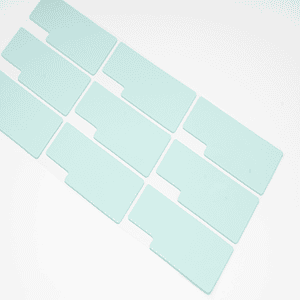
A thermal pad is a high-performance thermal interface material (TIM) that is a proven solution for heat deficiencies in DC/DC converters. It provides efficient heat transfer and robust electrical insulation even as a single, easy-to-install component.
Converter Module to Chassis or Enclosure
This is the most common and classic use case for a thermal pad with a DC/DC converter. Many converters are sold as standalone metal modules.
During operation, the entire module heats up, with the base plate serving as the primary thermal interface. A thermal pad is placed between this base plate and the metal frame or enclosure of the larger system.
The pad performs three crucial functions in this case-
- Heat conduction: draws heat from the converter to the chassis
- Electrical insulation: prevents electrical risks from the converter from short-circuiting the grounded chassis.
- Mechanical compliance: it deforms and fills the microscopic and macroscopic gaps caused by surface irregularities and variations in manufacturing.
Converter to Shield or Cover Plate
In many compact designs, especially telecommunications and networking equipment, space is very critical. There may not be room for a discrete, finned heat sink.
In these EMI-shielded designs, you can use thermal pads to connect the hot components of your DC/DC converter PCB directly to the flat metal shields that enclose the electronic unit.
This design allows the shield to perform two core functions: offer protection from electromagnetic interference and also serves as a functional heat sink.
PCB to Secondary Heat Spreader
In smaller or fanless systems like industrial controllers or medical devices, a different advanced technique is used. Heat from the DC/DC converter is first channeled through the printed circuit board (PCB) itself using a dense array of copper plates and thermal holes.
The back of the PCB now becomes the hot surface. You can then use a thermal pad to interface the back of the PCB with a metal casing.
This completes the thermal path from the top components, through the PCB, to the system frame.
Why Thermal Pads Are the Preferred Option

As an engineer, designer, or a project manager in the industrial manufacturing field, sometimes you are faced with the challenges of choosing the perfect material for a particular project.
The right choice of material isn’t just about performance; it’s equally about reliability, consistency, and ease of production. Thermal pads are commonly preferred over thermal greases, epoxies, or other rigid interface solutions when it comes to DC/DC converters.
The reason for this being so, is that thermal pads offer a unique combination of benefits, perfectly suited to an industrial manufacturing environment.
The importance of thermal pads for the longevity of DC/DC converters cannot be overstated, they include:
- Controlled Thickness and Consistent Gap Filling: Unlike messy grease, a thermal pad has a precise and uniform thickness, ensuring predictable, all-round thermal performance.
- Robust Electrical Insulation: Most thermal pads are excellent dielectrics, they provide your product with reliable electrical insulation.
- Compressibility to Handle Tolerance Stack-ups: The soft and flexible nature of thermal pads allows them to easily compress and fill gaps caused by manufacturing tolerances. They ensure the interface is void-free, something a rigid material would fail at.
- Clean Assembly Without Curing or Migration: Thermal pads are a peel-and-stick solution. They are clean, easy to apply, and require no curing time, speeding up production time.
Increasing Power Density Raises Thermal Demands
The thermal challenge isn’t static; it’s intensifying. Electronic systems continue to push toward higher switching frequencies to reduce the size of magnetic components, and smaller converter footprints to save valuable board space. For this reason, material selection becomes more critical than ever.
The properties of a thermal pad, such as core thermal conductivity, compressibility, and long-term stability, are not just specifications on a datasheet, they directly impact the ultimate success of the final product.
Conclusion
DC/DC converters are essential to the operation of nearly all modern electronic systems. At the same time, they are highly concentrated sources of waste heat. Thermal pads offer a lasting solution to this problem, providing reliable heat transfer and excellent electrical insulation.
Choosing the right thermal interface material, as well as where to buy thermal pads for your project is a critical engineering decision that directly impacts the performance of the entire system. Partner with us today. At JIUJU, we understand the critical role of thermal management in power electronics.
To discuss your DC/DC converter application and request samples of high-performance thermal pads, reach out to our team of thermal experts at JIUJU now!