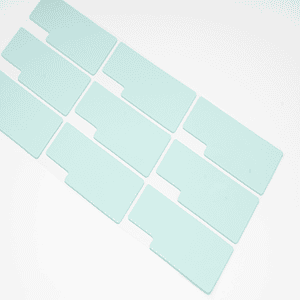

Thermal grease is a heat-conductive material applied between the interface components and cooling units. Without thermal grease, air gaps (which are thermally insulating) form between these surfaces. These gaps reduce heat transfer efficiency. Hence, it leads to poor heat dissipation and overheating issues. Here, thermal grease plays a key role in your electronics cooling.
Wondering how? That is what this article discusses.
In this guide, you’ll learn what is thermal grease and how it works. We will also discuss its common applications, and the application process. You’ll also get to know about the difference between thermal grease and other thermal compounds, and some often-asked questions.
So, let’s get in!

What is Thermal Grease?
Thermal grease (often known as thermal paste, thermal compound, heat sink compound, or thermal interface material) is basically a soft, paste-like substance. It is typically produced with a variation of a polymerizable liquid matrix along with fillers. Like zinc oxide, aluminum oxide, or silver particles.
By nature, it is a thermally conductive material (a material that can dissipate heat) yet electrically insulating. Means it does not let electricity pass through parts. That is why it is commonly used in computing devices or applied between a heat source (like a CPU or GPU) and a heat sink. With thermal grease performance, the paste eliminates air gaps between surfaces and lowers thermal resistance. As a result, it helps enhance heat dissipation and prevent overheating.
Electronic Components and Heat Transfer
Our daily-use electronic devices (like mobile phones, laptops, or even electric vehicles (EVs)) contain electronic components. Like CPUs, GPUs, power transistors, and ICs. All of these components generate heat during operation. As device performance and power density increase due to use, managing this heat becomes extremely crucial.
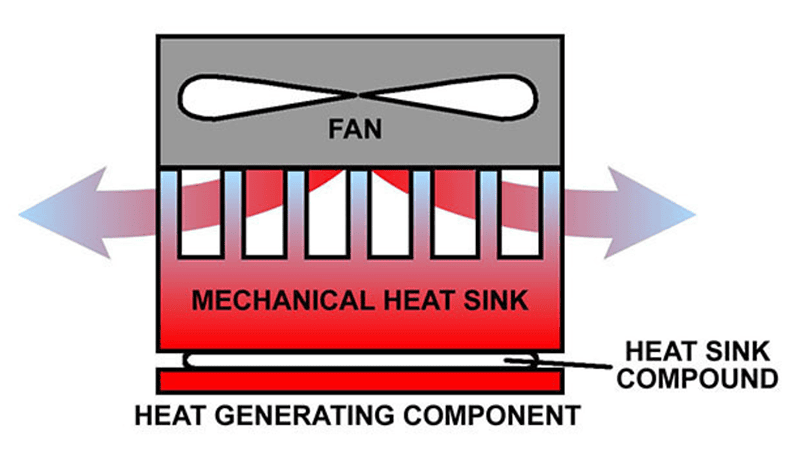
To control temperature, although electronic systems already use cooling solutions (like heat sinks). Heat sinks are components designed to transfer heat away from hot components. However, issue arises due to microscopic gaps.
Basically, electronic component surfaces (like CPUs) and heat sinks appear flat. However, they have microscopic surface irregularities that are not visible to naked eye. When these surfaces are integrated, tiny air gaps form between them. These gaps trap air.
Since air is a poor heat conductor, heat is not transferred efficiently between component surfaces. And as a result, excess heat causes overheating and performance issues.
Role of Thermal Grease in Heat Sink Integration and Thermal Conductivity
To solve this heat transfer problem, thermal grease is used as a thermal interface material (TIM). It helps in several ways, such as:
- Eliminate Air Gaps
When you deposit a layer between an electronic component and a heat sink, thermal paste fills gaps evenly.
- Reduce Thermal Resistance
By filling all gaps, paste lowers thermal resistance. This way, heat transfer process becomes faster heating surface and heat sink.
- Improve Heat Sink Efficiency
With better surface contact, heat spreads evenly across the heat sink base. As a result, cooling systems work more efficiently and maintain stable operating temperatures.
- Provide Electrical Safety
Thermal pastes, most options, in the market are electrically insulating. They also help prevent short circuits while maintaining strong thermal conductivity.
- Provide Cost Efficiency
Thermal paste is also a low-cost cooling solution. Buying and applying thermal paste is far more affordable than upgrading hardware.
Thermal Paste and Its Common Applications
Heat paste is not only used for CPU cooling or GPU cooling. You can also use them in many other ways to improve thermal performance, efficiently transfer heat, prevent the device from permanent damage, and for different properties. You can use thermal paste or grease for:
| Application | How It Helps |
| LED Modules and Lighting Systems | Helps dissipate heat from LEDs to the metal housing. Hence, increase brightness stability and extend LED lifespan. |
| Power Transistors (MOSFETs, IGBTs) | Reduces thermal resistance between the device and heat sink. Also ensure reliable operation under high power loads. |
| Voltage Regulators and ICs | Enhances transfer of heat from small IC surfaces to heat spreaders. Hence, protecting sensitive components from thermal stress. |
| Automotive Electronics | Manages heat in control units and sensors exposed to high temperature. |
| Industrial Electronics | Maintains safe operating temperatures in continuous-run equipment. In fact, also reduces the risk of thermal failure. |
Applying Thermal Paste Effectively
Here is a step-by-step guide to applying thermal paste:
Step 1. Power Off The System and Collect All Required Stuff
Firstly, disconnect your system from the power outlet (if connected). Before starting the process, you must also keep all required tools in proximity. Like lint-free cloth, thermal grease, isopropyl alcohol, etc.
Step 2. Clean the Surface
Now you need to clean the area. To do that, first detach the heat sink. Next, dip a lint-free cloth with isopropyl alcohol. Afterward, wipe the CPU, GPU, or power module surface to remove old paste or dirt. Clean the heat sink as well.

Step 3. Apply a Small Amount
Next, place a pea-sized drop of about 0.2-0.3 ml of thermal paste at the center of the component.
Step 4. Spread Evenly
Make sure you spread the paste evenly. For that, you can use a plastic spreader or let the heat sink pressure spread it naturally. Just confirm the paste spreads evenly across the surface and doesn’t overflow. Too much paste can reduce the effectiveness of the thermal paste and cause a malfunction.

Step 5. Attach the Heat Sink
Next, carefully place and press the heat sink onto the component. Make sure you hold it at a moderate temperature. That way, the heat sink does not slide around. Then, tighten the screws to secure the cooler.
Step 6. Power On and Monitor Temperatures
Finally, turn on and use your device. Perform different operations and monitor your device performance at different temperatures.
Thermal Grease vs. Other Thermal Compounds
Thermal interface materials (TIMs) are widely used to improve heat transfer between electronic components and cooling solutions. Thermal grease is just one type of TIMs. There are several other options of TIMs available as well. Like thermal pads, thermal gel, etc.

Among all TIMs, thermal grease is a common choice among manufacturers. Because it provides high thermal conductivity by being applied evenly on metal surfaces. Thermal pads, on contrary, are also solid and easy to apply. However, they offer lower thermal conductivity than thermal grease. Thermal adhesives, whereas, are also used as they limit rework and component replacement.
Each thermal compound has its own advantages. The right choice, however, depends on several factors. Like thermal performance needs, ease of installation, reusability, and long-term reliability.
To understand the comparison better between different thermal solutions, check out the table below:
Comparison of Thermal Interface Materials
| Application | How It Helps |
|---|---|
| LED Modules and Lighting Systems | Helps dissipate heat from LEDs to the metal housing. Hence, increase brightness stability and extend LED lifespan. |
| Power Transistors (MOSFETs, IGBTs) | Reduces thermal resistance between the device and heat sink. Also ensure reliable operation under high power loads. |
| Voltage Regulators and ICs | Enhances transfer of heat from small IC surfaces to heat spreaders. Hence, protecting sensitive components from thermal stress. |
| Automotive Electronics | Manages heat in control units and sensors exposed to high temperature. |
| Industrial Electronics | Maintains safe operating temperatures in continuous-run equipment. In fact, also reduces the risk of thermal failure. |
Thermal Grease Manufacturers
Jiujutech is a leading thermal grease manufacturer and supplier in China. We have 20 years of experience in this industry. Our engineers with R&D expertise produce high-quality thermal paste and CPU grease products with low viscosity and offer up to 0.8–20 watts per meter-kelvin (W/m·K) thermal conductivity.
All our thermal solutions not just maintain stable thermal performance, but also provide low thermal resistance and are applied with even distribution. These properties make them suitable for your CPUs, EV Batteries & Power Electronics projects.
Moreover, we also provide a variety of options in thermal grease. In fact, our team can also customize a thermal solution for you, meeting your purchasing and project development needs.

Thermal Grease Alternatives
Sometimes, thermal grease may not be a practical thermal solution due to cost or production requirements. In such cases, you can always opt for other types of thermal solutions. For example:
- Silicone thermal grease
- Liquid metal compound
- Carbon-based nano grease
- Phase change grease
- Thermal gel
Conclusion on Thermal Grease
When it comes to fulfill efficient heat transfer needs between electronic components, thermal grease is an ideal thermal solution . Compared to other thermal compounds (pads, gels, tapes, or potting compounds), thermal grease offers high thermal conductivity.
Depending on your application or project requirements, you can also opt for other thermal solutions. If you are unsure which thermal material you should select, contact us today for expert guidance and support.
FAQs
1. Are thermal grease and paste the same?
Yes. Because they are both just different names for the TIMs. You can use either of them to improve heat transfer and thermal conductivity in your electronic components.
2. Is thermal compound toxic?
Absolutely. All our thermal products are compliant with RoHS and international environmental standards.
3. How often should I reapply thermal grease?
If using Jiuju Silicone-based grease, you should change it every 3–5 years. If using Metal/Ceramic, reapply every 5–8 years.
4. Is thermal paste electrically conductive?
Most thermal products are electrically insulating, not conductive. So always check the product specifications before your purchase and use.
5. What does thermal grease do?
It is commonly used in electric and power electronics to:
- Improve heat transfer
- Reduce thermal resistance
- Prevent overheating
- Enhance performance
- Extend component lifespan