
Heat is the silent killer of performance. Push your CPU or GPU hard enough and every degree counts. That’s where thermal management comes in. For builders and engineers it’s not just about adding a heatsink or better fans. It is about what happens between those parts. Small mistakes in your thermal interface, such as improper application of thermal paste, can mean higher temps, throttled speeds or even reduced lifespan for your components.
This guide is for people who care about reliability and performance – from enthusiasts chasing the best frame rates to engineers designing next-gen electronic devices. You’ll learn how to get the most out of your cooling setup for best performance : what materials matter, how to choose and how to apply them for consistent results.
What Is Thermal Grease?
Thermal grease, also known as thermal paste or thermal compound, is a thermal interface material that helps heat flow between a chip and a heatsink. Even polished metal surfaces have tiny microscopic imperfections that trap air, and air is the worst conductor of heat. The grease fills those air gaps, creating a smooth path for heat transfer.
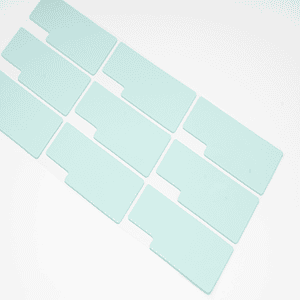
Unlike a thermal pad which comes pre-formed, thermal grease spreads evenly to form a thin, flexible layer. That thin layer reduces electrical resistance between two surfaces and enhances performance. Most compounds have ceramic or metallic fillers suspended in a silicone or synthetic liquid, giving them high thermal conductivity and long term stability.
Thermal grease doesn’t just cool your CPU or GPU; it is essential for maintaining optimal performance under heavy load — especially in systems with an integrated heat spreader, though it is also used in direct-die cooling setups during installation .
The Function of Thermal Grease
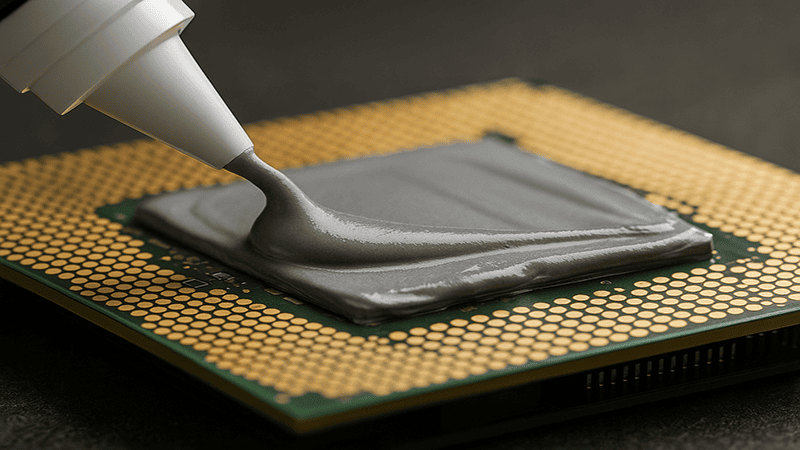
Thermal grease is the silent link that keeps heat moving where it should — away from the chip and into the cooler.
Its job isn’t flashy, but it’s critical. This thermal interface material exists purely to make heat transfer more efficient between two solid surfaces that don’t naturally fit together. Without it, microscopic air gaps act as insulation, trapping energy and cutting down performance.
Here’s what it actually does:
- Reduces thermal resistance.
The grease fills those invisible voids and replaces low-conductivity air with a high thermal conductivity compound. That single step slashes interfacial resistance and helps heat move freely to the heatsink. - Improves overall heat dissipation.
When your processor generates waste heat, the compound pushes that energy toward the cooler faster. It’s what keeps components running at safe temperatures during heavy load. - Ensures stable contact over time.
The compound flexes with expansion and contraction cycles caused by hot and cool phases. That flexibility keeps the interface sealed and maintains consistent reliability and performance. - Protects delicate hardware.
Most greases are not conductive, so even if a bit spreads beyond the contact zone, it won’t short nearby electronic devices.
Typical Application Scenarios
Thermal grease isn’t just for gaming rigs. It’s used anywhere heat threatens performance or reliability in both consumer and industrial hardware . These are the environments where it truly earns its place:
CPU Coolers in Consumer and Desktop Computing

Every CPU cooler hides a thin layer of thermal paste. It bridges the CPU’s IHS and motherboard heatsink, letting heat flow instead of pool. Gamers and performance enthusiasts count on it for stable temps and quiet fans. GPUs and laptops use pre-applied thermal compounds to keep compact systems cool. Better heat dissipation means smoother performance and longer battery life.
Industrial and Power Electronics
In semiconductor devices like drives, inverters, and LEDs, thermal grease carries waste heat into the heatsink or cold plate. Engineers choose high thermal conductivity materials and thermal adhesives that survive solid state vibration, cycling, and long duty hours. Reliable interfaces keep interfacial resistance low and components safe, helping to minimize the overall cost of maintenance.
Aerospace and Medical Systems
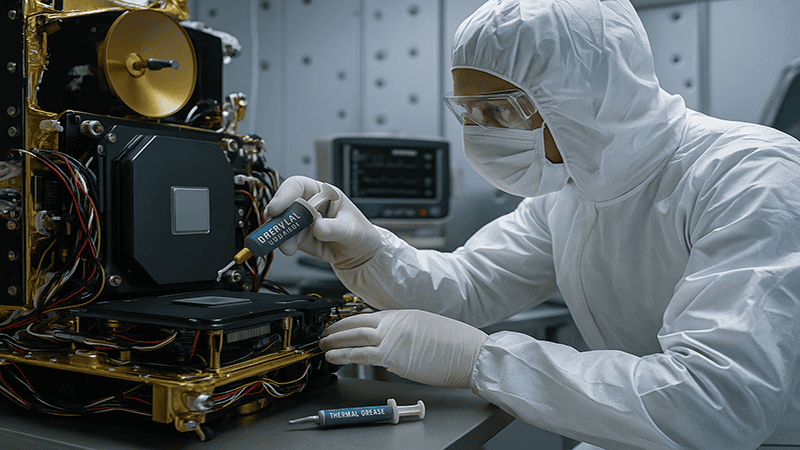
Precision electronic devices—from satellites to scanners—depend on non-conductive greases or phase change materials for stable thermal performance. These compounds must stay thin, light, and durable through extreme conditions.
Across industries, thermal grease quietly keeps every system cooler, steadier, and more reliable.
Performance index interpretation
The numbers behind a tube of thermal grease tell you everything about how it performs.
Thermal conductivity (λ)
This shows how efficiently a thermal interface material moves heat, measured in W/m·K. Higher usually means faster transfer—but consistency and contact quality matter just as much. According to a 2023 white paper by Laird Performance Materials, uniform spreading often has more impact on real-world results than raw thermal conductivity figures.
Thermal resistance (Rₜₕ):
The lower this value, the less heat gets trapped between the chip and the heat sink. The National Renewable Energy Laboratory (NREL) notes that reducing bond-line thickness and applying consistent pressure can sharply decrease Rₜₕ and boost overall performance.
Bond-line thickness:
A thinner, even layer cuts interfacial resistance and enhances heat dissipation.
Electrical traits:
Avoid electrically conductive pastes near sensitive devices unless proper insulation is guaranteed.
A compound rated around 4 W/m·K can outperform a poorly applied “high-end” paste. The real trick isn’t chasing numbers when considering adhesives . It is choosing a material that fits your system and mounting method.
How to Choose the Right Type of Thermal Grease

Picking the right thermal compound isn’t about brand. It’s about fit. Here’s an example of what to focus on when picking the right compound for your build or design:
- Match the job: High-power CPUs, GPUs, and industrial devices need high thermal conductivity grease to move heat fast. Light-duty systems can use standard thermal pastes or thermal pads.
- Check the material. Look for thermal compounds with stable ceramic or metal-oxide fillers. They spread easily and stay consistent under load. For sensitive electronics devices, choose a non-conductive formula to avoid shorts.
- Balance performance and maintenance: Premium thermal grease runs cooler but may dry out sooner. Silicone-based options last longer with slightly higher resistance.
- Mind the details: Always read the datasheet. Viscosity, operating range, and curing time define real-world thermal performance.
The best type is the one that fits your components, workload, and environment not just the highest number on the tube.
Common Application Methods

The way you apply thermal grease decides how well it performs.
Start with clean surfaces. Any dust or dried paste ruins heat transfer.
Here are the methods that work:
- Pea method: A small drop of thermal grease in the center. The pressure from the heat sink spreads it evenly.
- Line method: A thin strip across the CPU’s IHS. Great for rectangular chips.
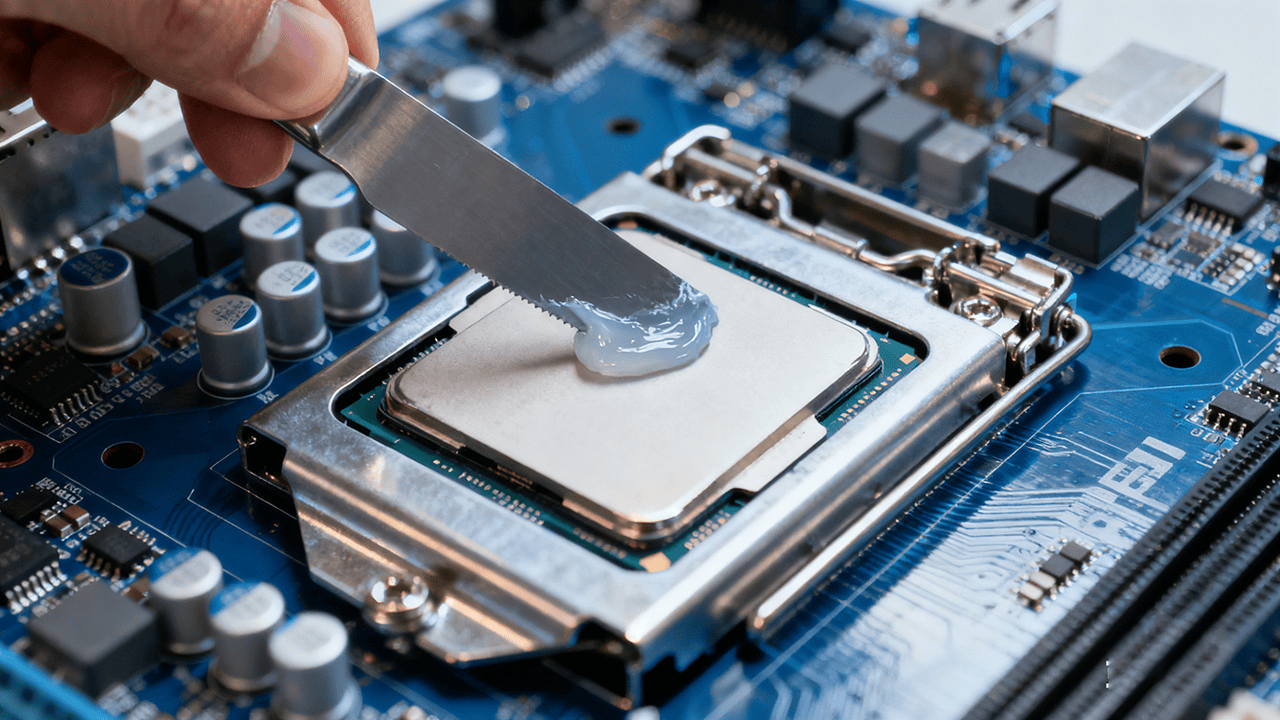
- Spread method: A flat, even coat using a spatula or card. Ideal when you want full surface coverage.
- Cross method: Two thin lines forming an X for large components like GPUs.
Tighten the CPU coolers with steady, even pressure. Uneven mounting creates air gaps and weakens thermal performance.
A clean, uniform film of thermal compound, including best seller options, is what separates an efficient system from a hot one.
Common Failures and Solutions
Even the best thermal grease can fail if it’s used the wrong way, leading to unnecessary cost but every problem has a fix.
- Pump-out or migration:Repeated thermal cycling can cause the compound to gradually migrate from the interface, reintroducing micro-air gaps and increasing junction temperature over time. Use a stable thermal interface material rated for cycling and re-mount if thermal performance drops. A study inApplied Thermal Engineering confirms this effect increases junction temps over time
- Dry-out or separation: Some thermal compounds lose their fluidity, harden or separate into filler and carrier. That increases thermal resistance and lowers heat dissipation. Replace them with fresh fluid materials designed for high-temperature reliability.
- Too thick or too thin: Extra paste raises resistance; too little leaves bare surfaces. Apply just enough to form a thin, even film under pressure.
- Wrong type: Electrically conductive grease near sensitive electronics’ devices risks shorts. Always use non-conductive thermal compounds unless your system specifically calls for conductive ones.
Consistent prep and the right material turn every failure into a quick fix.
Common Technical Misconceptions About Thermal Grease
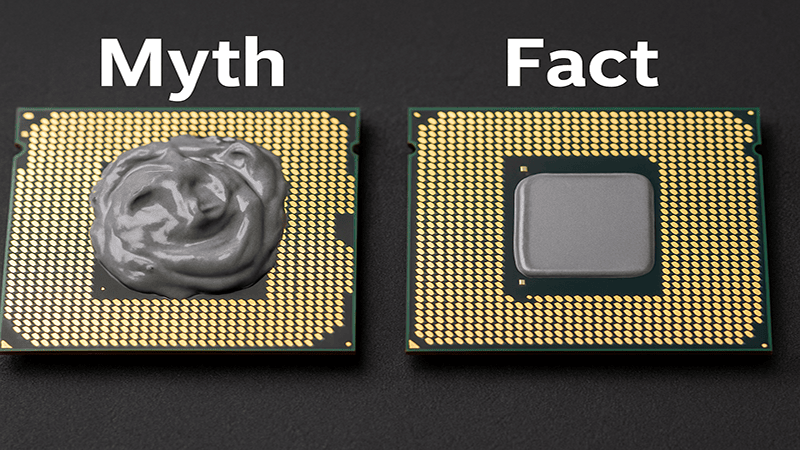
Thermal grease sounds simple, right? Just squeeze and spread. But a few small myths keep even smart builders from getting the cooling they expect.
Here’s what often goes wrong:
- “More grease means better cooling.” It doesn’t. A thick layer traps heat and adds thermal resistance. What you want is a paper-thin coat that lets heat flow cleanly to the heatsink.
- “All greases work the same.” Not close. High-thermal-conductivity materials move heat faster and stay stable under load. Cheap compounds dry out fast and hurt performance.
- “Grease lasts forever.” It won’t. After months of hot-cold cycles, it hardens or pumps out. If your system runs warmer than it used to, it’s time to reapply.
- “Conductive is better.”Be careful. Electrically conductive types can short tiny electronics. Unless you know your setup, go non-conductive.
Getting the basics right turns a messy job into smooth, reliable thermal performance.
The bottom line & what to do now
Great cooling doesn’t just happen. It starts with having the right thermal interface materials & the know-how to go with them.
At Jiujutech, we design & supply our own high-performance TIMs including thermal grease, thermal pads and more which are made specifically for consistent heat dissipation, low resistance & a long, reliable lifespan. Whether you’re trying to get the most out of your CPU cooler or industrial semiconductor devices or precision electronics systems, our team is here to help you choose the right thermal interface material for what you’re trying to do.
Need some expert advice or some product recommendations? Get in touch with our specialists here.
Because when it comes down to it, every single degree matters, and generally, that’s why Jiujutech is here to make sure your components stay cool, run efficiently & are built to last.
FAQs
Is Vaseline a good substitute for thermal grease?
No. Vaseline breaks down under heat and has poor heat transfer. It can’t replace true thermal interface materials.
Is thermal grease the same as liquid metal?
No. Liquid metals are a type of TIM, but they carry higher risk due to electrical conductivity and potential corrosion, so they require careful surface compatibility and controlled application. Thermal grease is non-conductive, easier to apply and safer for most electronics.
Why Jiujutech thermal grease?
Because Jiujutech products are tested for high performance, stability, low thermal resistance, and long term reliability in consumer and industrial systems, making it comparable to top industry standards.
How often to replace thermal grease?
Every 1-2 years, depending on heat cycles and material quality. If temperatures go up or performance drops, it’s time to reapply. Read more about this here.