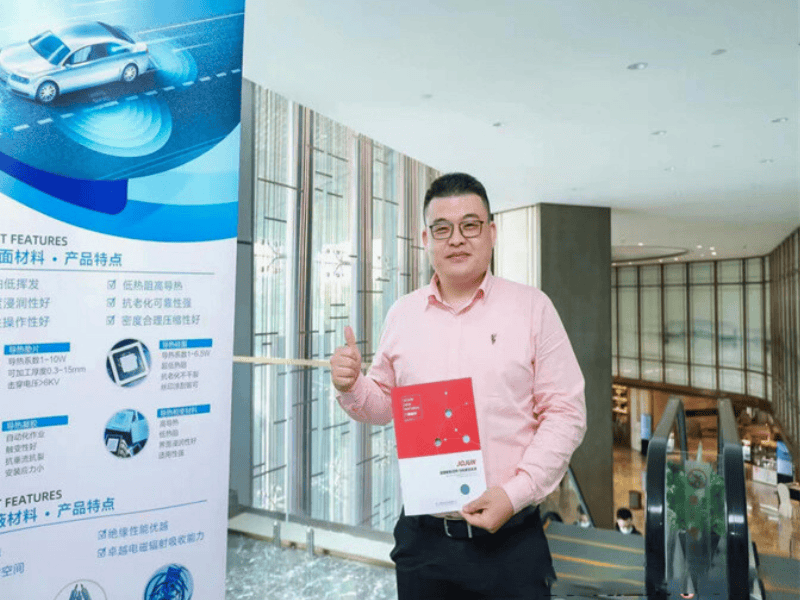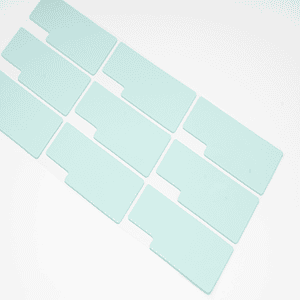

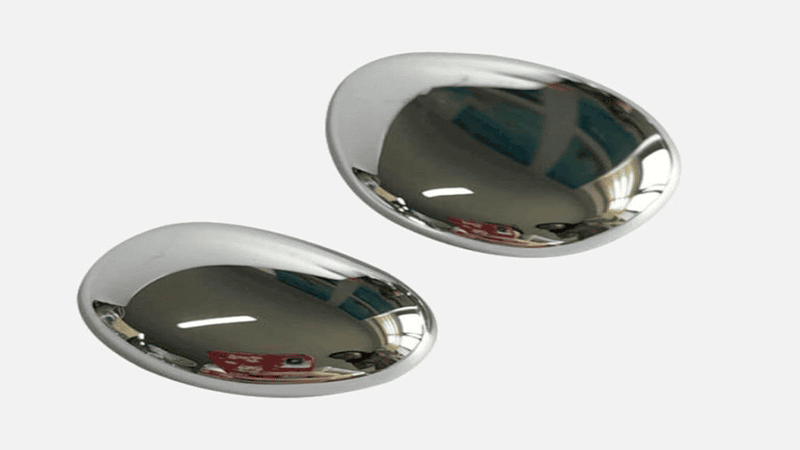
The rapid development of faster, cheaper, and more powerful data processing systems has driven the most significant technological advances in modern history. However, the physical means used to improve processing capabilities (denser transistors, 3D stacking, and higher clock speeds) have resulted in the formation of a formidable thermal barrier. Keeping these powerful electronic devices cool is a critical factor in determining their speed, efficiency, and long-term reliability.
Thanks to the exceptionally high thermal and electrical conductivity, low viscosity, and superior fluidity of liquid metals (LMs), representing a unique class of metals and metal alloys, LM TIMs are now emerging as highly desirable candidates in a wide range of industries. These industries range from wearable electronics and thermal management to soft machines and biomedical materials science.
In this article, we will take you through how liquid metal isn’t just an incremental improvement but is also critical for sustaining high-performance computing and overcoming the physical limits of conventional TIMs.
What Is Liquid Metal? The Science of Alloys Liquid at Room Temperature
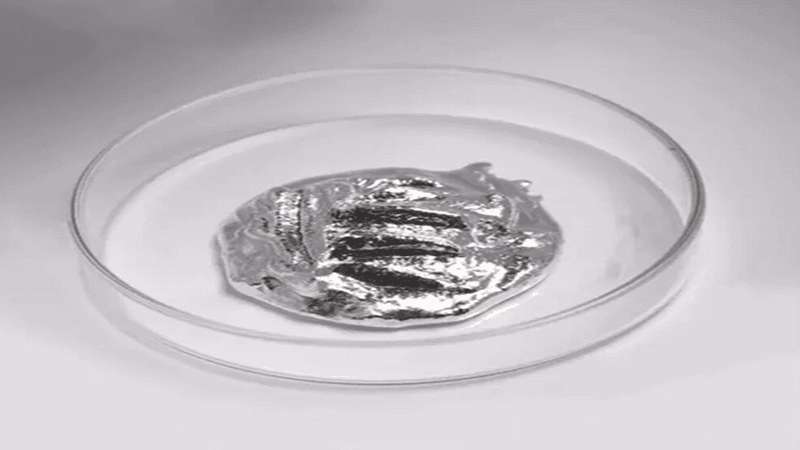
Liquid metal is a class of metal alloy that remains in a liquid form at (or near) room temperature. This material is characterized by a combination of unique properties. They include high electrical conductivity, thermal conductivity, mechanical conformability, and shape maintainability, making them the subject of dedicated research and development.
When it comes to thermal management, liquid metal thermal interface materials (LMTIMs) are advanced compounds that are typically based on gallium alloys. They offer superior heat transfer by filling the microscopic gaps between a heat source (e.g., a CPU) and a cooling solution (e.g., a heatsink). Usually, these LMTIMs exceed 40 W/m·K, values that far surpass the 5-15 W/m·K found in standard greases.
Common Liquid Alloys: Gallium-Based
- Ga–In (EGaIn): The eutectic gallium-indium alloy, commonly referred to as EGaIn, is prized as a non-toxic substitute for mercury in applications like thermometers and heat exchangers. The melting temperature of this unique liquid metal alloy is a mere 15.7°C. The fluidity and high conductivity of Ga-In make it a favorite choice for use in flexible electronics and soft robotics.
- Ga–In–Sn (Galinstan): Galinstan consists of gallium indium tin. The eutectic formulation has a low melting point, melting at approximately +11°C, while other compositions can remain liquid down to -19°C. Galinstan, a well-known ternary alloy, is specially sought after for its excellent thermal and electrical conductivity, low toxicity, and its ability to wet various surfaces. This makes it a versatile material for electronic device cooling, printable conductors, and advanced thermal management solutions.
Key Physical Characteristics and Self-Healing Oxide Layers
The uniqueness of liquid metals is directed by several key characteristics, which include the following:
- Metallic Bonding: Unlike materials that rely on phonon-dependent conduction (lattice vibrations), liquid metals transfer heat using free electron conduction, which has proven to be much more efficient than even solid metals.
- Fluidity at Near-Room Temperature: The ability of liquid metal TIMs to maintain their liquid state allows them to conform perfectly to surfaces, eliminating the microscopic air gap problems that come with using solid or pasty TIMs.
- High Thermal Conductivity: Their metallic nature gives them an order of magnitude higher thermal conductivity than conventional polymer-based TIMs.
- Low Electrical Resistivity: As metals, LMTIMs are excellent electrical conductors, a property that is both an advantage for some applications and a significant disadvantage in others.
- Self-Healing Oxide Skin: Gallium-based alloys rapidly form a very thin oxide passivating layer in the presence of air. This oxide layer and protective oxide skin have a high surface tension, which allows the liquid metal to maintain a spherical shape and be molded, stretched, and formed into stable shapes. This property is key for applications in soft robotics, stretchable electronics, and flexible circuits.
Safety and Environmental Considerations Compared with Mercury
With a melting point of -38.86°C, the best-known liquid metal is mercury (Hg). Although it has historically been used in electronics and medical devices, its extreme toxicity and high vapor pressure have been a subject of heavy regulations. The liquid gallium alloys used today stand in stark contrast to mercury liquid metals. They offer stable and safer alternatives, particularly a non-toxic environment, which has been one of the main factors that led to their adoption in both consumer and industrial applications.
How Liquid Metal Differs from Conventional TIMs and Liquid Metal Coolants
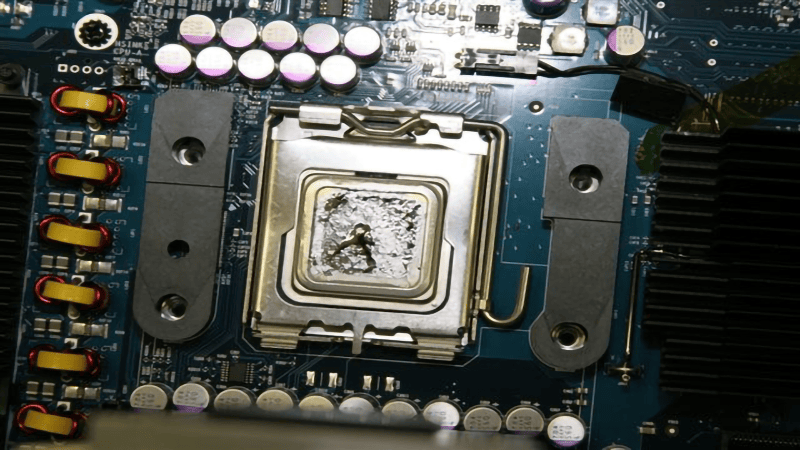
Conventional thermal interface materials, widely used in thermal management, are inherently limited by their relatively low thermal conductivity. Liquid metal TIMs are a great alternative to conventional TIMs. They can significantly reduce thermal contact resistance. Therefore, it is important that we distinguish LMTIMs from conventional TIMs and other liquid metal coolants.
Liquid Metal vs. Thermal Grease and Paste
While both are typically applied as fluids and used for high-performance computing, they possess fundamental properties that are worlds apart.
- Conduction Mechanism
The main difference between liquid metal TIMs and thermal grease/paste lies in their conduction mechanisms. Conventional thermal pastes are polymer-based matrices filled with thermally conductive small particles, yet electrically insulating, ceramic or metal particles. On the other hand, liquid metal is a homogeneous metallic fluid that offers direct and far superior metallic conduction.
- Performance
The thermal conductivity of liquid metal is much higher, typically ranging between 40 and 80 W/m·K. Conventional TIMs have a thermal conductivity of about 5-15 W/m·K. As a result, LMTIMs can transfer heat much more effectively, providing a 10-20°C drop in temperature with high TDP CPUs.
- Risks
Because liquid metals conduct electricity, if there is a leakage, it can lead to catastrophic short circuits. Moreso, liquid gallium-based alloys tend to be corrosive, especially to aluminum heat sinks. For this reason, we highly recommend that you only use liquid metal with copper or nickel-plated heat sinks.
- Long-Term Stability:
Unlike some thermal pastes that can dry out during thermal cycling, a properly contained liquid metal application is incredibly stable. Liquid metal TIMs are able to maintain their performance without changing viscosity.
| Feature | High-Performance Thermal Paste | Liquid Metal TIM |
|---|---|---|
| Thermal Conductivity | 5 – 15 W/m·K | 40 – 80+ W/m·K |
| Conduction Mechanism | Phonon (particle-based in polymer) | Free-Electron (direct metallic) |
| Electrical Conductivity | Typically Insulating | Highly Conductive |
| Corrosion Risk | Very Low | High (especially with Aluminum) |
| Application Risk | Low (non-conductive) | High (short-circuit hazard) |
Liquid Metal vs. Thermal Pads
To start with, while both materials mitigate against heat in electronic devices, they do this via totally different approaches. As such, they each possess properties that make one or the other unique to specific use applications.
- Performance vs. Practicality
This is a trade-off between the lowest possible thermal resistance and ease of assembly. A thermal pad offers unparalleled simplicity, cleanliness, and guaranteed electrical insulation. Liquid metal on its own end offers peak thermal performance.
- Application Boundaries
Thermal pads are ideal for filling larger, less uniform spaces, such as those between memory chips or VRMs and their heatsinks. Liquid metal is only suitable for the ultra-thin, highly controlled space between a processing die/IHS and a cooler cold plate.
Key Thermal Properties and Performance Advantages of Liquid Metal TIMs
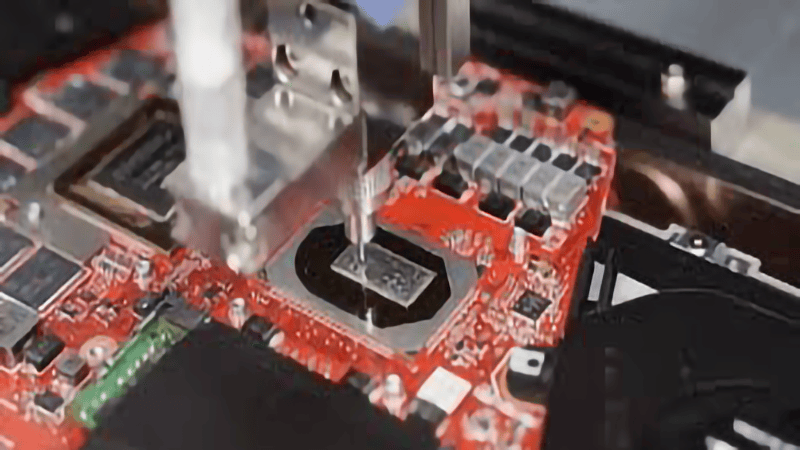
Liquid metals possess properties that set them in a league, different from traditional TIMs. In this section, we will be looking at some of the properties that serve as pillars for the potential of liquid metals as advanced thermal interface materials.
- Extremely High Thermal Conductivity: Liquid alloys, which typically range from 20 to 80 W/m·K, possess thermal conductivity in higher magnitude than typical thermal pastes. This helps reduce junction temperatures by several degrees Celsius.
- Near Metal-to-Metal Contact: The incredible surface wetting of liquid metal creates direct contact, minimizing thermal resistance. This is ideal for high TDP CPUs or overclocked systems.
- Thin Bond Line: Liquid metal TIMs naturally form a very thin, conformal layer, ensuring that there are no micro air gaps to degrade performance.
- Superior Heat Spreading: When you need to use a TIM in applications with extremely high heat flux, liquid metal is ideally the most favourable option. This is because LMTIMs easily conduct heat across the interface and distribute it laterally. This singular function reduces the intensity of central hot spots on the processor die.
- Performance Consistency Under High Load: Unlike some materials that can degrade at high and prolonged temperatures, liquid metal maintains its overall performance without changes in viscosity. This makes it ideal for data centers and workstations subjected to heavy and continuous loads.
Typical Applications of Liquid Metal TIMs
Due to the unique liquid metal found in these alloys and their ability to remain liquid at room temperature, LM TIMs are extremely versatile and applicable to a wide variety of uses, especially in applications where absolute thermal performance is non-negotiable. Liquid metal TIMs have been used in devices across multiple industries, from Sony PlayStation gaming systems to Dell’s Alienware laptops and high-performance data centers.
Professional and Industrial Systems
Liquid metal TIMs are used in silent industrial PCs that have no fans and in high-power workstations where reliability under sustained load is uncompromisable. They provide the thermal margin needed for stable, long-term operation.
Although design constraints are stringent, the use of liquid metal TIMs for advanced avionics, radar systems, and directed-energy weapons is currently being explored. According to Yahoo! Finance, the aerospace thermal management market is tipped to witness a CAGR growth of 2.7% between 2025 and 2032. The high conductivity of liquid metal is also exploited in the production of 5G antennas, paired with indium tin oxide microsensors, and even used as the basis for self-healing circuits.
Significant thermal management challenges have been created as a result of the world’s transition to electric vehicles. It is critical to ensure optimal performance of battery thermal management systems. A study shows that the electric vehicle thermal management market is expected to reach new heights in a matter of months, with a likely CAGR of 16.7% in 2028, and the market share of liquid cooling solutions is expected to increase substantially.
Consumer Electronics and Emerging Wearable Electronics
For PC enthusiasts, liquid metal is the gold standard. A typical high-end metallic TIM boasts a conductivity of over 70 W/m·K. By using LMTIM between the IHS (integrated heat spreader) and the heatsink of your CPU, you have significantly increased its cooling efficiency, lowering temperatures by about 10-20°C.
To manage the enormous heat generated by powerful processors in gaming consoles and laptops, manufacturers like Sony and Asus often use liquid metal as a standard TIM in their high-end products.
For example, i9-13980HX processor gaming laptops that use liquid metal TIM can reach sustained power outputs of up to 163W, while maintaining temperatures of about 90°C. This feat is impossible with greasy alternatives. According to Asus ROG studies, LM can be up to 17 times more efficient at cooling CPUs/GPUs than traditional paste.
AI, HPC, and Data Center Platforms
This is where liquid metal is becoming a key technology. The power densities of modern AI accelerators and HPC processors can exceed 2 W/mm², creating local hotspots above 100°C. In applications like these, the physical limits of conventional cooling solutions get maxxed. Hence, the liquid metal TIM is no longer just a support layer but a determining factor in system performance.
To facilitate and reduce energy consumption, data centers are increasingly adopting direct liquid cooling solutions. In these systems where heat is transferred to a liquid-cooled cold plate, the TIM is critical. LM ensures the most efficient transfer from the chip package to the cold plate, maximizing the system’s overall efficiency.
Engineering Challenges and Surface Tension of Liquid Metal TIMs
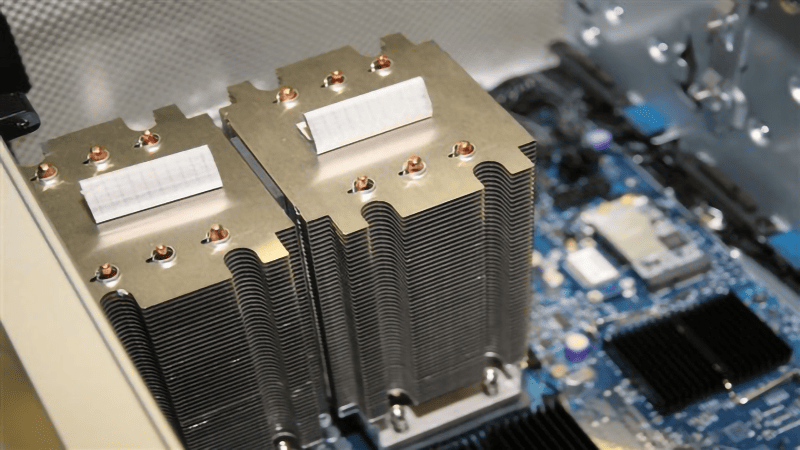
While the performance of LMTIMs is undeniable, they present significant engineering challenges that must be paid attention to.
Corrosion and Material Compatibility
Material compatibility poses the most potentially destructive challenge. While gallium-based liquid metals offer exceptional thermal conductivity, they are chemically aggressive.
The main concern is aluminum and its alloys. Gallium actively dissolves the protective aluminum oxide layer (Al₂O₃) that normally makes aluminum passive and corrosion-resistant. Once this layer is broken, a chemical reaction is initiated, and liquid gallium rapidly diffuses along the aluminum grain boundaries. The ensuing corrosion process results in a rapid and catastrophic metallurgical failure.
How to solve this:
The simplest solution is to completely avoid direct contact with incompatible materials. Only use industry standard, oxygen-free copper or nickel-plated copper for surfaces that come into contact with the liquid metal TIM.
Flow, Pump-Out, and Containment
The same fluidity that allows liquid metal to achieve a perfect interface also makes it difficult to control. In high-vibration applications like laptops and automotive systems, keeping the liquid metal droplets exactly where they’re needed is a significant challenge.
As a result of their high density and low viscosity, LMs are prone to migration under mechanical shock. If a liquid metal droplet gets detached from the interface, it can travel a significant distance within the device.
How to solve this:
To solve this engineering problem with liquid metals, you need to create a physical barrier around the target area to contain the substance. This is often done using a precisely cut gasket made of closed-cell foam (such as Poron®) or a high-temperature polymer.
Electrical Conductivity and System Risk
This is the most prevalent risk during assembly and operation. Liquid metal TIMs are, by nature, highly conductive metals. A single incorrectly positioned drop of liquid metal connecting two components, or a component and a ground plane, will create a low-resistance short circuit, causing irreversible damage to the processor.
How to solve this:
With-
- Precision Automated Dispensing
- Conformal Coating and Masking
- Mechanical Clamping
Manufacturing, Reliability, and Lifecycle Considerations
To fully evaluate the performance of a thermal interface material, you must consider its long-term durability. Factors such as load pressure, ambient temperature, and humidity can affect it. Key issues such as wettability and corrosion also must be addressed at the design stage.
During manufacturing, especially for mass production, automated and precise dispensing systems must be used for the application of the exact amount of LM TIM needed. This helps to ensure consistency and control of yield.
Also, it is crucial that every product in which liquid metal TIMs are used must undergo rigorous thermal and vibration cycling with long-term reliability testing. This is done to ensure the continual performance of the TIM over a long period.
When Liquid Metal Is Not the Right Solution
Despite its incredible performance, liquid metal is not a solution for all thermal challenges, particularly in the following instances:
- Affordability: Liquid metal is significantly more expensive than traditional TIMs. If you’re dealing with low-power components or cost-sensitive products, LM TIMs are not ideal.
- Assembly Complexity: Liquid metal is not the right choice for applications that involve large, irregular spaces or require a simple assembly process.
- Auxiliary Components: Thermal pads and greases remain essential for cooling surrounding components like memory, VRMs, and chipsets, where electrical insulation is more important than achieving the lowest possible thermal resistance.
Future Directions in Liquid Metal Thermal Interface Materials Science
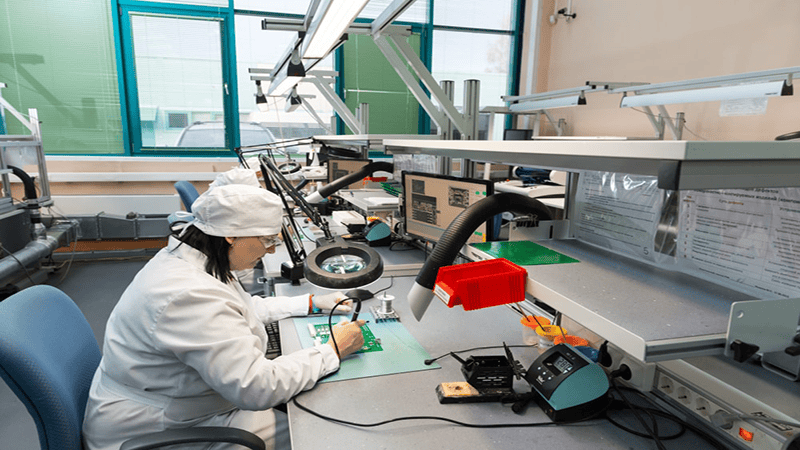
The global research landscape shows concentrated efforts to overcome the limitations of liquid metals with regard to their mechanical properties. Studies indicate a constant increase in liquid metal cooling research over the past five years. In the coming years, significant changes are expected in the following aspects of LM TIMs:
Phase-Change and Hybrid Materials
As a result of recent Intel research, we now have a hybrid TIM architecture that combines molten metal at the center with a conformable silicone adhesive at the edges. A dam structure holds the liquid metal, while the TIM adhesive conforms to the package’s deformation. This hybrid approach shows us that the future is not just about raw material specifications, but about how smartly systems integrate.
Rheology Tuning and Composite Formulations
Research is still ongoing to create liquid metal composites and refine their rheology (flow properties), so as to reduce the risk of migration while maintaining high conductivity and enhancing the mechanical properties of these soft materials.
Interface-Free Bonding
The ultimate goal is to develop solutions that create a direct, interface-free thermal bond between the chip and the heatsink, altogether eliminating the need for a separate TIM.
Conclusion
Liquid metal is not a one-size-fits-all replacement for other TIMs such as thermal pads and thermal grease, both having their specialized use applications, but rather a strategic and enabling solution for the most extreme thermal challenges. Its role in enabling sustained performance at power densities once considered impossible makes it a cornerstone of next-generation computing.
While conventional TIMs like thermal paste and solder remain viable, LMTIMs offer a leap in performance due to their inherently high thermal and electrical conductivity, flexibility, and low melting points. Contact our team of experts at JIUJU today to get a free quote on world-class thermal interface materials for your products.
Our Testing Capability
| What We Test | Equipment | What It Tells Us |
|---|---|---|
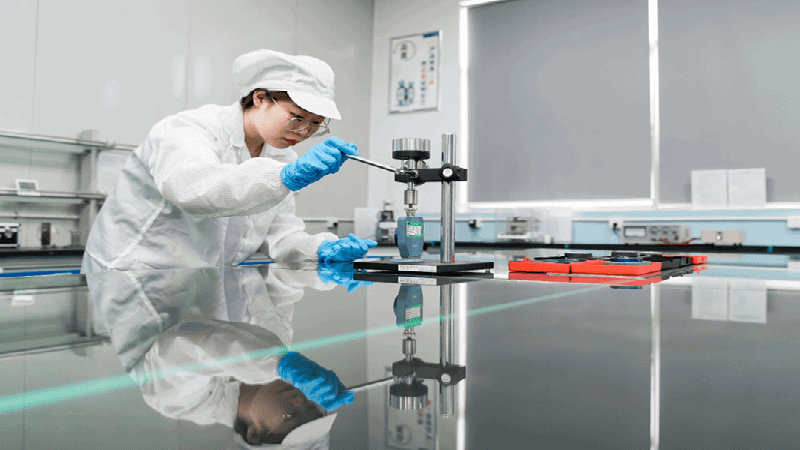
| Long-Term Reliability and Stability | Accelerated Environmental Cycling Chamber | This tells us how long the material can stay before degradation, pump-out, and increased thermal resistance begin to set in. We investigate this by simulating years of operational stress under various ambient conditions, through rapidly alternating extreme temperatures (-40°C to 150°C) and high humidity. |
| Bulk Thermal Conductivity | ASTM D5470 Thermal Interface Material Tester | This test gives us the true and objective thermal conductivity (W/m K) of the liquid metal TIM. We measure the intrinsic ability of the material to transfer heat across its cross-sectional area under controlled and uniform heat flow. This process eliminates real-world variables. |
Why This Data Is Different from Reviews
Typical Review Method: The average enthusiast or product reviewer applies liquid metal to their CPU, assembles the system, and runs software or a game as a benchmark. The reviewer then measures the temperature of the processor as reported by its internal sensors. While this is useful for a general idea, this method is highly sensitive and subject to variables such as mounting pressure, ambient temperature, cooling fan speed, and the specific architecture of the PC.
Our method: We use standardized test methods that are internationally recognized by the American Society for Testing and Materials (ASTM), carried out in a strictly controlled laboratory environment. Isolating the material itself, our equipment measures its key thermal properties under multiple, repeatable conditions.
The difference: With our method, we are able to provide you with objective, scientific, verifiable, and comparable data. While the 10°C temperature drop observed and reported by a reviewer is simply anecdotal, our reported thermal conductivity of 75 W/m K is a verifiable physical property. This engineering-grade data allows our partners to accurately model thermal performance in their simulations and be confident that our materials will deliver consistent performance.
Why Trust This Guide?
In a market filled with opinions, true expertise comes from experience. This guide is not a summary or rip-off of articles you can find online; it is a direct reflection of the deep, hands-on knowledge developed within JIUJU’s labs, made up of 100+ R&D technical staff. With more than 20 years of dedicated experience and backed by top-tier certifications like ISO 9001 and IATF 16949, we are the trusted thermal management partner for over 500 companies worldwide.