When we hear the terms thermal management or heat dissipation. The very first thing that ticks in mind is components cooling. Components include several types of electronics, gadgets, or devices. Cooling of these components then relates to thermal interface materials (TIMs).
TIMs are the materials known for managing heat, filling air gaps, and providing bonding strength to components. Further among these TIMs, Thermal Pad and Thermal Tape are highlighted products. Both are used in components to handle thermal management duties.
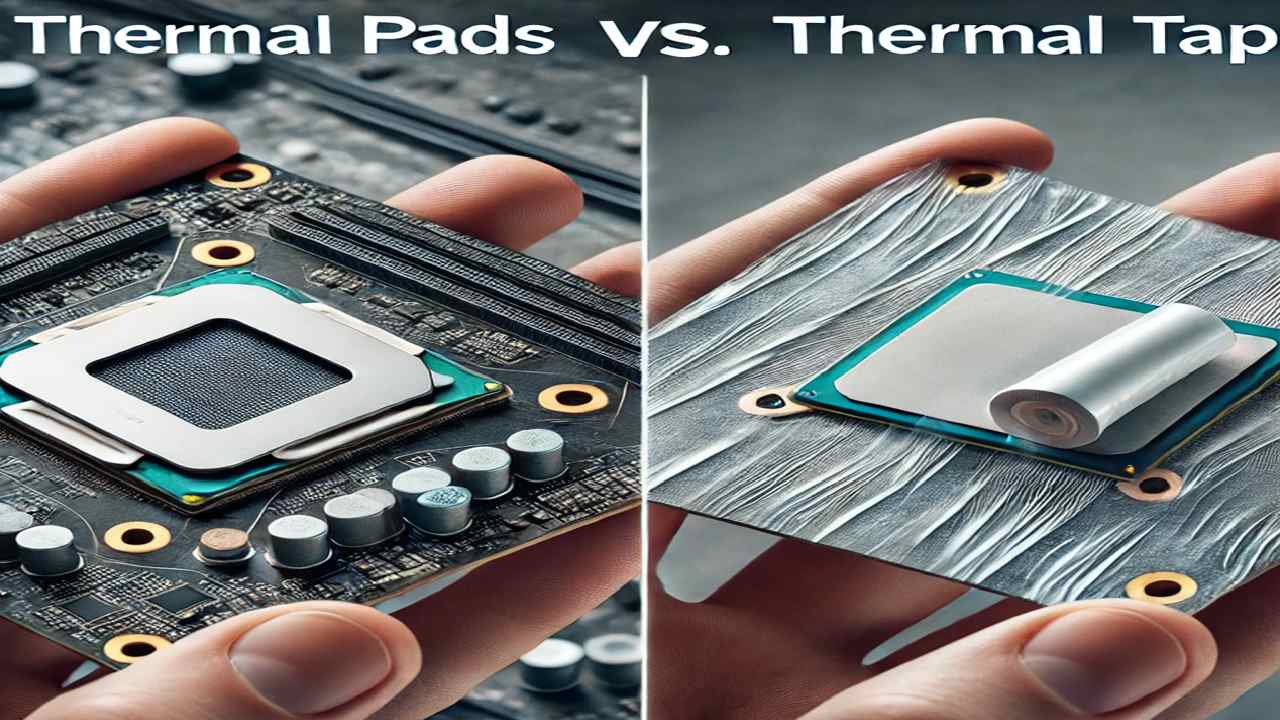
In today’s article, we will look into the detailed comparison between Thermal Pads vs. Thermal Tape. How do they differ in thermal features? What are their Pros & Cons? When to choose a thermal pad & when to choose a thermal tape? So, let’s begin the comparison of both TIMs.

Understanding Thermal Pad & Thermal Tape
– Thermal Pad
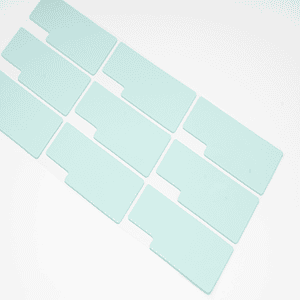
The Thermal Pad is a pad or matt-like material used to manage heat and eliminate air gaps. It is made of silicone as base material along with multiple conductive fillers. The thermal pad is compatible with CPUs, GPUs, and VRMs.
Key Features
- A Thermal Pad features a thermal conductivity of 1-15 W/mK.
- A Thermal Pad features temperature ranges of -40C to +250 degrees Celsius.
- A Thermal Pad features resistance against vibrations, shocks, and pressure.
- A Thermal Pad features safety against short circuits. (electrically insulated)
- A Thermal Pad features ease of application.
- A Thermal Pad features compatibility in multiple sizes and dimensions.
Types
- Silicone-Based Thermal Pads
- Graphite Thermal Pads
- Phase-Change Thermal Pads
- Ceramic-Based Thermal Pads
- Metal-Based Thermal Pads
- Non-Silicone Thermal Pads

– Thermal Tape
Thermal Tape is a material used to fulfil dual purposes, heat dissipation and component bonding. It is made of Silicone/Acrylic as a base material and a combination of conductive fillers. Thermal tape is widely used in the electronics, automotive, and construction industries.
Key Features
- A Thermal Tape provides thermal conductivity of 0.5 to 5 W/mK.
- A Thermal Tape provides an operating temperature of -40 to 260 degrees Celcius.
- A Thermal Tape provides ease of application even for beginners.
- A Thermal Tape provides ease of cutting into various required sizes.
- A Thermal Tape provides ease of availability and affordability.
- A Thermal Tape provides strong mechanical bonding between two surfaces.
Types
- Double-Sided Adhesive Tape
- Silicone Adhesive Tape
- Kapton Film
- Foils
- Glass Cloth
- Polyester Tape
- Acrylic Adhesives
- Very High Bond Tape

Thermal Pad vs. Thermal Tape
1: Thermal Conductivity
Thermal Pad:
- Thermal Pad usually offers a thermal conductivity range of 1-15 W/mK. It may differ in + & – depending upon the specific type of thermal pads.
Thermal Tape:
- Thermal Tape offers a thermal conductivity of 0.5 to 5 W/mK. It is only suitable for low to medium-level thermal management tasks.
Outcome:
2: Operating Temperature Range
Thermal Pad:
- Thermal Pad stays stronger against various temperatures without any compromise. They provide an operating temperature range of -40C to +250 degrees Celsius.
Thermal Tape:
- Thermal Tape is known to be a strong adhesive in front of temperatures. It provides an operating temperature range of -40C to +260 degrees Celsius.
Outcome:
- The results are tied between both. Thermal Tape has a slight edge over the Thermal Pad.
3: Ease of Application
Thermal Pad:
- Thermal Pad can be cut into required sizes and thickness. One simply needs to cut and apply the thermal pad. So it offers an extreme ease of application or installation.
Thermal Tape:
- Similarly, thermal tape also offers the same ease of application as a thermal pad. It also comes in rolls and strips form which can be cut as per the required size.
Outcome:
- Results are tied, both Thermal Pad & Thermal Tape provide similar ease of installation.

4: Lifespan/Longevity
Thermal Pad:
- The standard lifespan of a thermal pad is around 3 to 7 years (more in some cases). It acts strong against extreme environmental conditions and temperatures.
Thermal Tape:
- Thermal Tape offers a lifespan of 2 to 5 years. This is less than the lifespan of a thermal pad. Continuous exposure to heat may decrease its durability and longevity.
Outcome:
- Thermal Pad is the winner in this regard, due to improved lifespan and durability.
5: Reusability
Thermal Pad:
- Thermal Pad can be reused several times unless it starts showing physical degradation. If physically damaged avoid reusing the thermal pad.
Thermal Tape:
- Thermal Tape can’t be reused once removed. It loses the adhesive strength and may negatively impact the performance if reused in such a condition.
Outcome:
- Thermal Pad is again the winner here, it offers reusability in various scenarios.
6: Adhesive Strength
Thermal Pad:
- As per its nature, the thermal pad is only the heat-transferring TIM. It is not mainly built as an adhesive material. So it does not offer adhesive strength.
Thermal Tape:
- Thermal Tape is meant to be a strong adhesive and heat-transferring material. It eliminates the need for screws/brackets/clips.
Outcome:
- Thermal Tape is chosen as a winner here because of its adhesiveness and heat dissipation.

7: Price/Cost
Thermal Pad:
- Thermal Pad offers higher thermal conductivity and costs more because of expensive ingredients. It usually costs $5 to $50 as per its relevant type.
Thermal Tape:
- Thermal Tape costs less than thermal pads because it offers lower thermal conductivity. So the cost of ingredients does not exceed the usual budget range in thermal tape.
Outcome:
- Thermal Tape is a winner when it comes to pricing factors.
– Pros & Cons of Thermal Pad
Pros:
- Higher Thermal Conductivity
- Longer Lifespan
- Offers Reusability
- Offers Ease of Application
Cons:
- No adhesive/bonding
- Expensive
– Pros & Cons of Thermal Tape
Pros:
- Features both Thermal Conductivity & Bonding
- Easy to Apply
- Perfect for Moderate Thermal Duties
- Budget Friendly
Cons:
- Lower Thermal Conductivity
- Not Reusable
– When to Choose Thermal Pads?
- When thermal conductivity is the main priority.
- When durability and longevity matter.
- When there is a need for reusability.
- When ease of application is required.
– When to Choose Thermal Tape?
- When adhesive strength is the main priority.
- When there are moderate-level thermal tasks to manage.
- When the budget is tight with no other option.
- When ease of application is required.

JiuJu’s TIMs
Apart from comparison, knowing a reputable TIM manufacturer is also essential. JiJu is a recommended choice here because we offer quality thermal interface materials. Our manufacturing department has expertise in manufacturing top-class Thermal Pads and Tapes.
The quality of our raw materials is affiliated with the required standards. Moreover, we have upgraded machinery/equipment, a skilled team, and an organized storage system. Our shipping partners also belong to reputable organizations performing up to the standard.
So, contact our support team for more information about our products and pricing. JiuJu provides its customers with wholesale rates and discounted offers. So far, we have more than 500 clients across the globe using our quality thermal interface materials.
Wrapping Up
Choosing between a Thermal Pad vs. Thermal Tape depends upon requirements and compatibility. Because both the TIMs have their importance and functionality in thermal management. Choose a thermal pad if higher thermal conductivity and a longer lifespan are priorities.
Similarly, for strong adhesive properties, thermal tape can be preferred. It is also a budget-friendly option compared to thermal pads. It solely depends upon the requirement and compatibility of components. So we wrap up the discussion with a decision in the hands of users.
Searching for a quality Thermal Pad or Thermal Tape? Click on the link and check out these by JiuJu.