
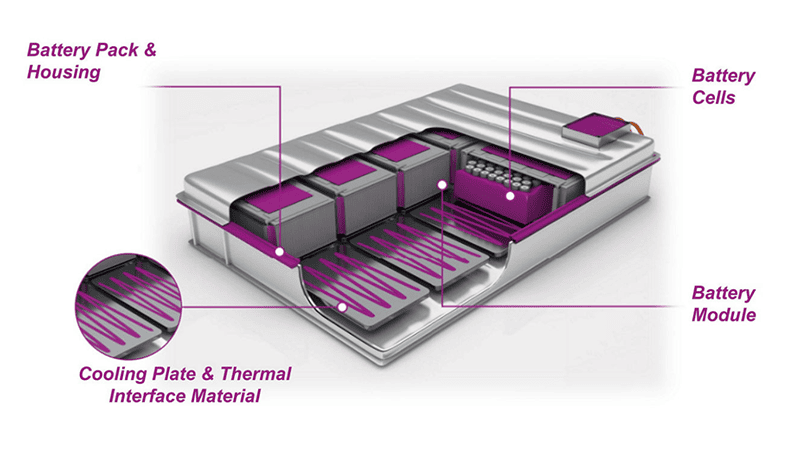
Over the years, industrial EVs have modernized and evolved too much. They now handle heavy-duty operations and operate for long hours in harsh conditions. Since they heavily rely on high-capacity battery systems, while operating in hot weather and extreme working conditions, they also generate excess heat.
To manage heat, keep batteries at optimal temperature (15°C-35°C), and extend batteries’ life span, manufacturers use Thermal Conductivity Materials. As an engineer, you must know about how thermal conductivity materials enhance industrial EVs’ performance. And that is exactly what this blog covers.
In this guide, we will discuss what thermal conductive materials are and why thermal management is non-negotiable in EV batteries. We will also take you through a list of top thermal conductive solutions and factors to consider during material selection.
So let’s get in!
What are Thermal Conductivity materials?
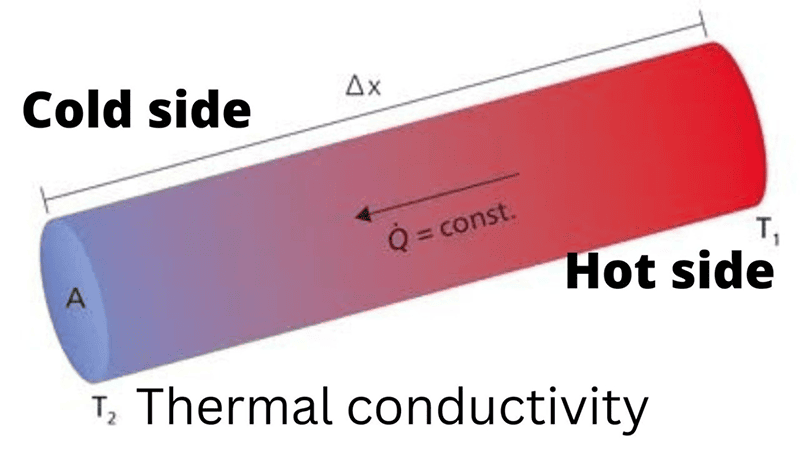
Before discussing Thermal conductivity materials, let’s go through the basics of thermal conductivity.The term thermal conductivity/ heat conductivity/ thermal conduction basically refers to the capacity of a certain material to transfer heat from one point to another. It is typically referred to as k and measured in (W/m.K). A material with high thermal conductivity transfers heat fast, while a material with low thermal conductivity acts more like insulation.
When heat is generated inside any electronic or electrical systems, it naturally moves from hotter areas to cooler ones. When high thermal conductivity materials, therefore are used, they enhance heat transfer process up to 2X to avoid heat buildup inside the unit. These heat conduction materials act as pathways that help heat transfer from heat-generating components (like battery cells) toward heat sinks or cooling structures more quickly, while maintaining electrical conductivity.
The thermal properties of a conductivity material, however, depend heavily on several factors. Factors like material composition, density, thickness, and internal structure. For instance, many pure metals show high thermal conductivity due to free electrons and a longer mean free path. Non-metallic solids, on the other hand, usually have low thermal conductivity. In high-quality crystal materials, heat transfer can vary along different crystal axes.
In lithium-ion batteries and electronic systems, several types of thermal conductivity materials are used. Most commonly, thermal interface materials (TIMs) are used. These include thermal pastes, greases, gel, gap fillers, pads, and adhesives. These materials basically fill microscopic air gaps between surfaces, which mainly slows down the heat transfer process.
By filling areas, these substances help in better surface contact and allow heat to spread evenly. Some systems also use potting and encapsulation materials to provide both heat dissipation and environmental protection.
Why Thermal Management Matters?
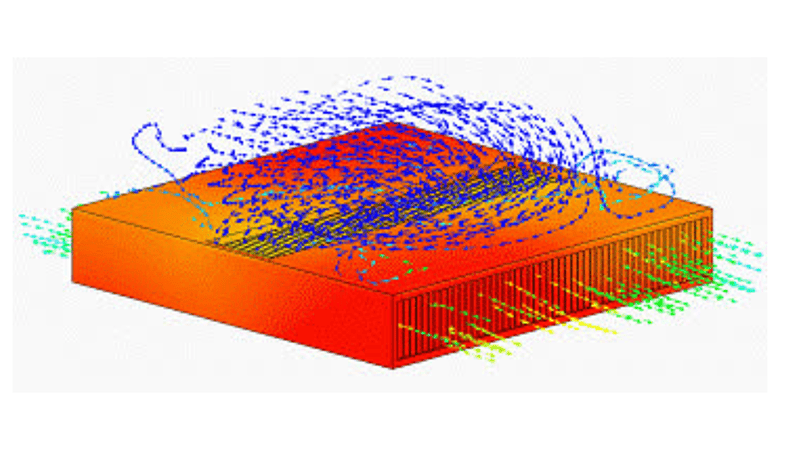
In electric car batteries, especially lithium-ion batteries, during charging, discharging, and power delivery, excess heat is generated. This heat, hence, creates a temperature difference and a temperature gradient across the battery pack. If heat transfer and heat flow inside batteries are not controlled and taken into account, it can:
- Increase thermal resistance
- Disturb steady state operation
- Cause battery degradation
- Impact the battery life span of each new battery
That is why, in electric car batteries, managing thermal resistivity, thermal conductance, and heat flux is extremely crucial to enhance industrial EV battery performance.
As technology improves, engineers like you use materials with consistent thermal conductivity, variable thermal conductivity based on design needs, and optimized interaction with thermal pads, convection, and cooling systems. Proper thermal management ultimately supports stable energy delivery, reliable power, and a long-term system suitable for demanding EV applications.
Top 5 Heat Conductivity Materials Used in Industrial EVs
In the section below, you will learn about the top high thermal conductivity materials commonly used in industrial EVs.
Thermal Pastes
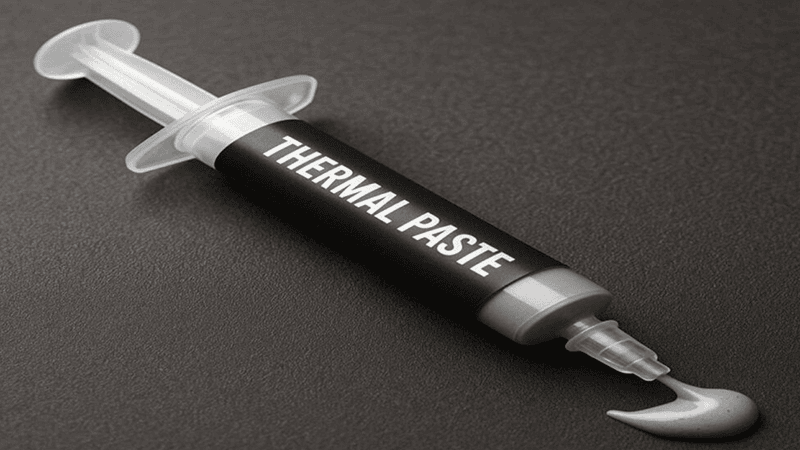
Thermal pastes (often known as thermal grease) are very common, easy-to-use, and budget-friendly thermal interface materials. Commonly, they have high thermal conductivity and low electrical conductivity. The standard application of thermal pastes is ideal for battery systems in industrial EVs. You will find several options in thermal pastes in the market. Famous versions of thermal pastes are silicone-based, metal-based, and ceramic-based.
Silicone-based Thermal Greases
Compared to all types of thermal grease or pastes, silicone-based thermal grease is the most widely used type. Not only does it offer excellent thermal conductivity, but it is also very flexible across a wide temperature range, from low temperatures to extreme operating conditions. To manage heat transfer in electric car batteries and power electronics, silicone-based thermal greases are the perfect choice.
Thermal Pads
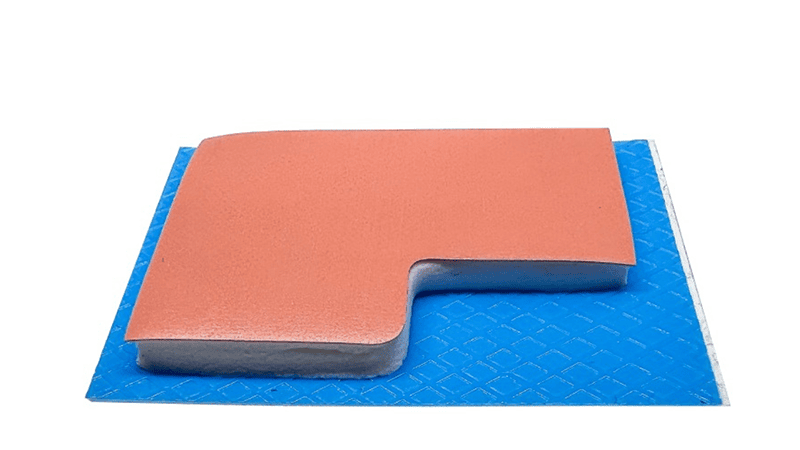
Thermal pads (also known as thermal gap fillers) are solid and compressible materials by shape. Like other TIMs, thermal pads also reduce thermal resistance and transfer heat between components efficiently. Their application process is also very simple, and that is why they are widely used thermal conductivity materials in industrial EV assemblies. You will also find different types of pads in the market. Common types are silicone thermal pads, ceramic-filled thermal pads, and graphite pads.
Thermal Gel
Among all TIMs, thermal gels are one ideal thermal solution for use in industrial EV battery packs. In fact, it is also very easy to apply and is a long-lasting material, as it doesn’t dry out very early compared to conductive paste. With its high thermal conductivity and low electrical conductivity, gels spread evenly under pressure, ensuring uniform heat flow across battery interfaces. They are ideal for lithium-ion battery systems with complex geometries and help control temperature difference, reduce hotspot formation, and minimize battery degradation during continuous operation.
Thermal Potting Glue
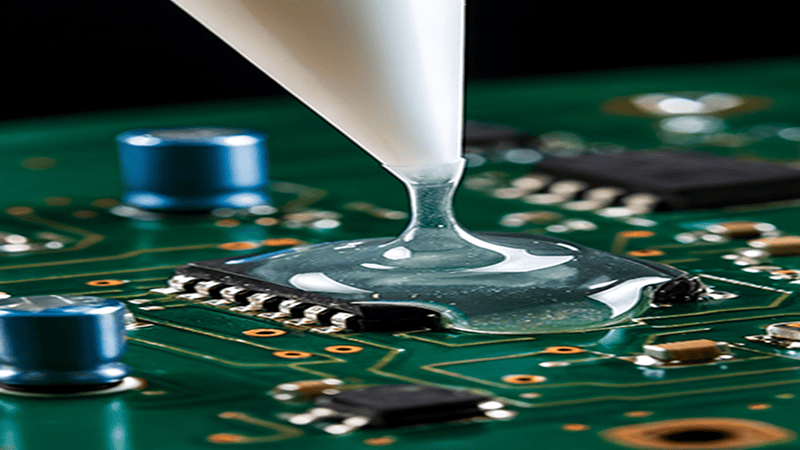
Thermal potting glue serves a dual purpose: It enhances the heat transfer process and provides mechanical protection. Once cured, it fills up the air gaps and forms a solid structure with component surface. That way, it conducts heat effectively while protecting components from moisture, vibration, and environmental stress.
Even though thermal potting glue offers low thermal conductance, it offers long-term durability. You can also use them for heat management in sealed battery systems where insulation, structural support, and controlled heat flow are required.
How High Thermal Conductivity Gel Enhances Performance in Electric Car Batteries?
Thermal conductivity gel is basically a soft and liquid thermal interface and heat conduction material. Like several other thermal conductivity materials, it is also widely used to improve thermal conductivity and heat transfer between heat-generating electronics and cooling elements in battery systems.
When used, it helps stabilize heat flux per unit area and unit time. The gel also supports a more uniform temperature and prevents sudden temperature changes that can occur when heat builds up and then changes abruptly.
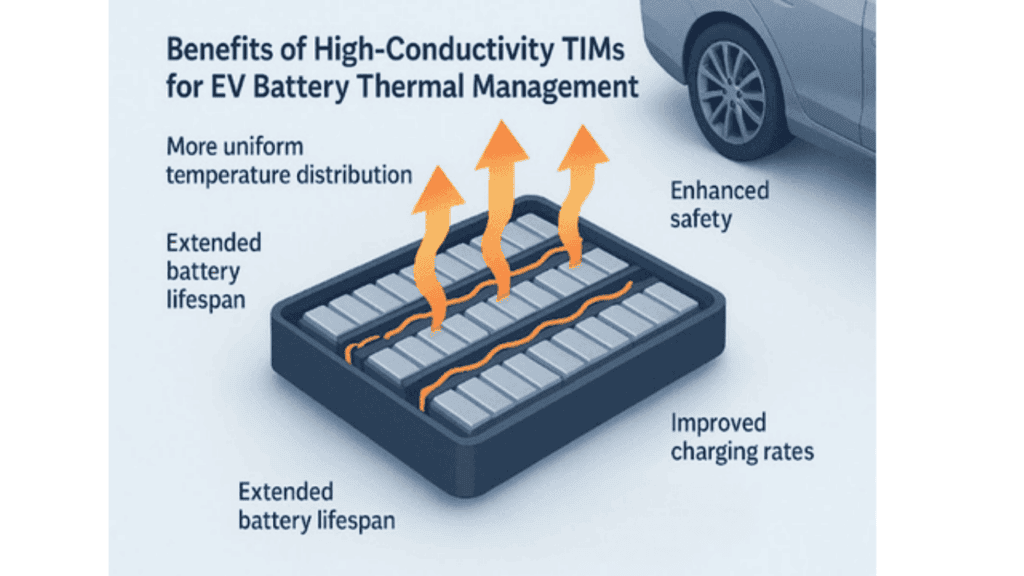
Another key advantage is the gel’s ability to maintain excellent thermal conductivity when operating under varying pressure, vibration, and component expansion. By improving thermal conduction consistently and supporting efficient interaction with heat sinks, convection, and cooling systems, gel directly contributes to better performance and longer battery life.
Effective heat control, therefore, reduces the risk of battery degradation, protects the new battery, and ensures reliable operation in modern EVs and industrial electric cars.
Case Study: Lessons from Industrial EV Battery Projects
Challenge:
Every customer that reached us from across industries had faced the same challenge. And that is uneven temperature distribution inside the EV battery and early battery degradation during long operating cycles in hot environments.
What we found:
- High temperature difference across battery cells
- Inconsistent heat flow due to air gaps
- Thermal solution losing contact under vibration
Root cause:
- Low adaptability of thermal conductivity material in complex battery geometries.
Solution:
We recommended them high thermal conductivity gel to ensure uniform heat conduction and stable thermal contact under pressure and vibration. We also suggested our other solutions, including thermal paste and pads, based on the project.
Result:
- Reduced hotspot formation
- Consistent conductivity under high load conditions
- Controlled BLT and thermal resistance
- Extended battery lifespan and improved reliability

Things Engineers Should Consider While Material Selection
After a detailed overview of thermal conductivity materials, the next approach is to choose the correct thermal material for industrial EV batteries. Here, most EV businesses and even engineers lack. That’s why we’ve summarized all the important points in this section that you must evaluate as a manufacturer.
First, always assess the thermal properties of the material. It is typically the thermal conductivity level of a material and how a material conducts heat and manages heat energy.
Next, you must consider how the material undergoes thermal and mechanical stress over time. In industrial EVs, materials face repeated heating and cooling cycles, vibration, and pressure. If a material degrades or loses contact under these conditions, obviously, heat transfer efficiency also drops, posing safety risks. That is why a compatibility of a material with a heat sink and surrounding structures you must also consider.
Finally, you should also consider factors like evaluating durability, environmental resistance, and long-term reliability. You must make sure to select a material that can maintain its thermal properties across the expected operating range and continue to manage heat energy.
Where to Get High-Quality Thermal Conductivity Materials?

Jiujutech is a reputable and leading manufacturer of thermal conductivity materials. With over 20+ years of experience in the thermal materials industry, Jiuju holds a strong grip. Our company holds the latest machinery, an experienced material scientists team, global certifications (ISO 9001, ISO 14001, UL, and IATF 16949), and provides 24/7 active customer support.
All our thermal conductivity materials products, like Thermal Pads, Thermal Gel, Thermal Grease, Thermal Tape, and Thermal Potting Glue, provide up to 1.2–50 W/m·K thermal conductivity and last 5+ years. They are also ideal for use in several industries, including the industrial EV and construction industries.
Moreover, our team also provides material customization for businesses across several industries. At Jiuju, we provide materials at wholesale rates along with a 1-year warranty. In fact, we also provide technical support to our customers throughout the product’s lifecycle.
Why Trust This Guide
This guide is built on hands-on engineering experience at Jiu Ju Tech. Since 2002, our team has developed and tested a wide range of thermal interface materials in real production and lab conditions. Every insight here comes from practical application, not theory or copied sources.
If you are looking for the right thermal solution for your EV application and are not sure which material to select, contact our experts today to get tailored support.